Monday, October 19, 2026

* All product/brand names, logos, and trademarks are property of their respective owners.
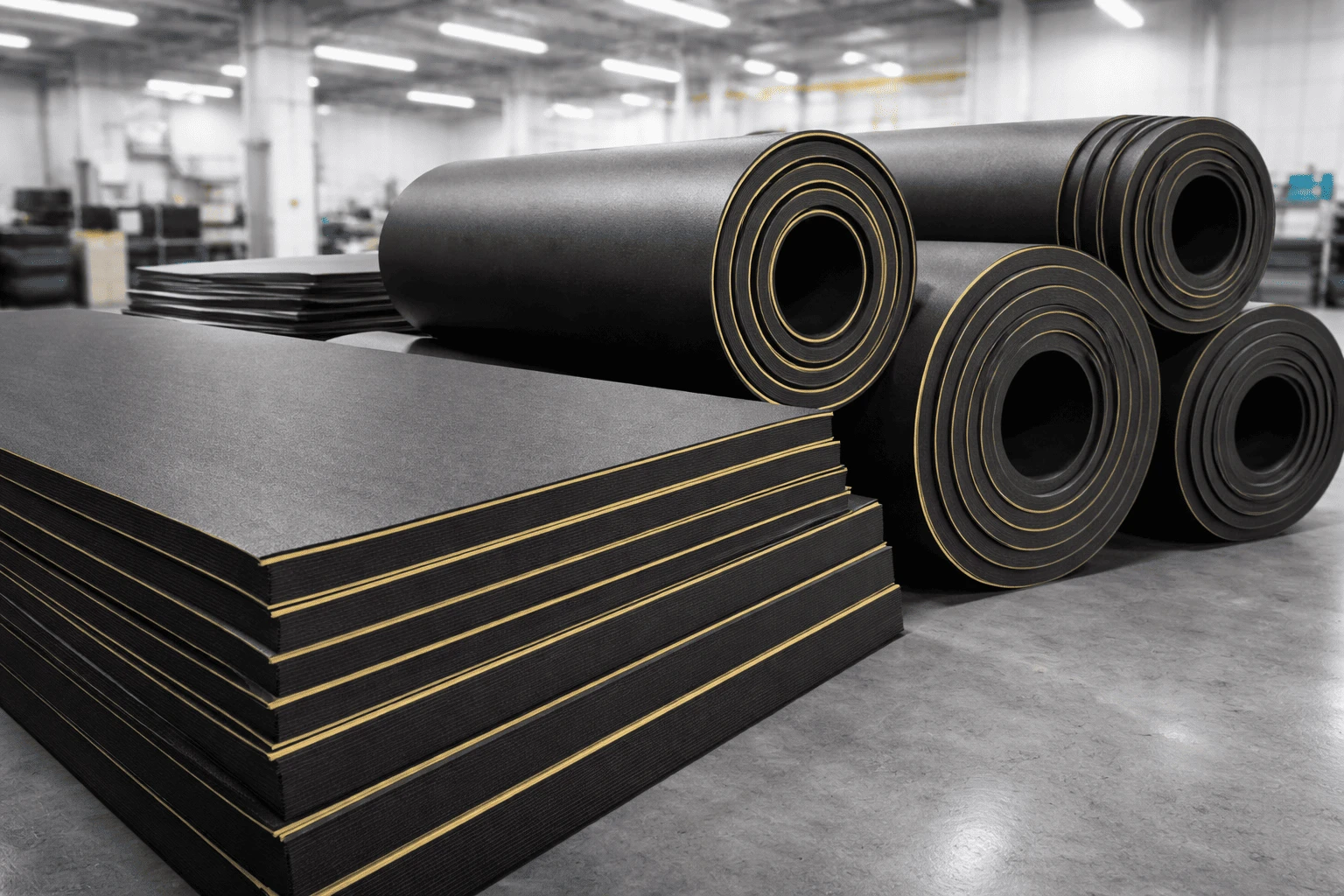
In UK industrial and commercial environments, selecting the right materials is crucial for ensuring reliable performance, longevity, and safer working conditions. Neoprene rubber sheets have become a go-to material across sectors such as manufacturing, construction, facilities management, and engineering due to their capacity to perform consistently in sealing, padding, and protection applications.
Neoprene’s value lies in its combination of flexibility, durability, and resistance to common industrial stressors. When exposed to oils, fluctuating temperatures, or repeated mechanical pressure, neoprene rubber sheets retain their integrity, making them well-suited to environments where materials must perform reliably while supporting overall workplace safety.
While neoprene rubber sheets are not a replacement for formal safety systems or regulatory compliance, they can play a supporting role in a safety-conscious approach to workplace design and maintenance. Properly applied, they help manage vibration, protect surfaces, and create controlled interfaces between components—factors that are especially important in busy operational settings.
Neoprene rubber has long been recognized as a versatile and dependable material for industrial use. Its performance characteristics make it particularly suitable for applications where both resilience and adaptability are required.
A key property of neoprene rubber sheets is their resistance to oils, weathering, and moderate chemical exposure. Industrial materials often face fluctuating temperatures and mechanical stress, and neoprene’s durability ensures consistent performance while reducing the risk of premature degradation.
Neoprene sheets also maintain flexibility under compression, allowing them to conform to uneven surfaces without cracking or losing effectiveness. This is especially important in sealing and protective applications, where even minor material failure can disrupt operational efficiency or increase maintenance needs.
From a safety perspective, neoprene rubber sheets contribute to more stable and controlled work environments. By absorbing impact and reducing vibration transfer, they can help minimize wear on equipment and surrounding structures. This not only supports smoother operation but also reduces secondary risks such as excessive noise or surface damage.
In areas where machinery interfaces with floors, panels, or guards, neoprene padding and protection act as a buffer, managing repetitive movement and contact. Over time, this contributes to more predictable performance and less disruption caused by material fatigue.
Sealing is a core requirement in many industrial systems, from machinery enclosures to plant room installations. Neoprene rubber sheets are frequently used because they offer a reliable balance of compressibility and recovery.
Neoprene rubber sheets are often applied to create seals between rigid components such as metal panels, access covers, and equipment housings. Their ability to compress evenly helps form consistent barriers against dust, moisture, and air movement, even on surfaces that are not perfectly uniform.
Products within the industrial rubber sheeting category are typically engineered to handle repeated use and environmental exposure, which is where Neoprene Rubber Sheet materials are commonly applied. Used appropriately, they help maintain separation between components and support the long-term reliability of sealed systems.
When specifying neoprene rubber sheets, thickness and sheet width are key considerations. Thicker materials may better accommodate surface irregularities, while wider sheets can reduce the number of joins required during installation. Fewer joins improve consistency and simplify fitting, particularly in larger enclosures or continuous sealing runs. Careful specification ensures the sealing solution performs as intended without introducing unnecessary complexity.
Beyond sealing, neoprene rubber sheets are widely used in padding and protective applications where impact, vibration, or repeated contact must be managed effectively.
Vibration from machinery is a common challenge in industrial settings. If unmanaged, it can accelerate wear, increase noise, and reduce operator comfort. Neoprene rubber sheets act as a resilient intermediary between contact surfaces, absorbing and dispersing energy to reduce the transmission of vibration into surrounding structures. This is particularly useful beneath equipment, around mounts, or between panels, where direct contact would otherwise amplify movement and noise.
For quick installation and secure placement, expanded neoprene sponge sheets with self-adhesive backing are often used. Their foam structure enhances shock absorption, while the adhesive layer allows for clean application without mechanical fixings. These materials are applied to protect edges, line panels, or cushion guards, particularly in retrofit scenarios where downtime must be minimized. Their flexibility ensures precise placement even in constrained spaces.
In the UK, material selection is guided by risk assessments and safety management practices. Neoprene rubber sheets are frequently used to support safer operational conditions, even though they do not constitute formal compliance measures on their own.
Materials that deteriorate quickly or perform inconsistently can introduce avoidable risks, from exposed gaps to unstable equipment interfaces. Neoprene sheets help mitigate these risks by providing controlled compression, surface protection, and cushioning where needed.
By reducing wear and limiting uncontrolled movement, they contribute to predictable maintenance schedules and help minimize the likelihood of unexpected failures, aligning closely with safety-focused decision-making.
Across various industries, neoprene rubber sheets are used to seal machinery housings, pad contact points, and protect surfaces exposed to repeated stress. Expanded foam variants are often chosen for vibration damping, while solid sheets are preferred for durability and sealing performance. Correct specification and installation are essential. Applied appropriately, neoprene rubber sheets enhance controlled working environments without overstating their role in formal compliance frameworks.
Choosing the right neoprene sheet involves understanding the demands of the application and aligning material characteristics accordingly.
Thickness affects how a material behaves under load. Thicker sheets offer greater cushioning or accommodate uneven surfaces, while thinner sheets allow for precise sealing in limited spaces. Density plays a role in applications involving vibration or repeated impact. Sheet width is a practical consideration during installation. Wider sheets improve efficiency and reduce material waste, particularly for larger applications requiring continuous coverage.
Different neoprene sheet formats serve distinct purposes. Solid neoprene is typically selected for sealing and durable protection, while sponge neoprene is better suited to padding and damping tasks. Matching the format to the application ensures consistent performance and reduces the need for premature replacement.
Neoprene rubber sheets remain a versatile and dependable choice for sealing, padding, and protection across UK industrial environments. Their combination of durability, flexibility, and resistance to common stressors makes them suitable for applications requiring reliable performance.
The key insight is the importance of proper specification. Understanding factors such as thickness, density, and format allows neoprene rubber sheets to be used effectively as part of a broader approach to equipment protection and workplace risk management. For those seeking further technical guidance or product context, additional information can be explored at therubbermats.uk, supporting informed, application-led decisions rather than a one-size-fits-all approach.

UK writer Evan covers home improvement, construction, and lifestyle trends, sharing practical insights for readers.
This guide cuts through the noise. Whether you are searching for a baby car seat in Dubai for the fi
7 September 2026
Outdoor flooring safety is a key consideration for industrial and commercial sites across the UK. Ac
2 February 2026
Slips and trips are among the most common causes of injury in both domestic and commercial environme
30 January 2026
Be the first to share your thoughts
No comments yet. Be the first to comment!
Share your thoughts and join the discussion below.



.webp&w=3840&q=75)