Wednesday, July 15, 2026

* All product/brand names, logos, and trademarks are property of their respective owners.
Floor matting plays a far more important role than many people realise. Beyond simply covering the floor, the right mat helps reduce slip risks, protects flooring, controls dirt and moisture, and contributes to overall hygiene. In the UK, where wet weather and heavy footfall are common in both public and private spaces, selecting the correct type of matting is essential.
Not all mats are designed for the same purpose. Commercial environments demand durability and presentation, industrial facilities require strength and resilience under pressure, and homes and light-commercial spaces prioritise comfort and absorbency. Understanding these differences allows you to choose a solution that performs well over time rather than needing frequent replacement. This guide explores the key distinctions between commercial, industrial, and home floor matting, helping you identify which type is best suited to your environment.
Commercial premises such as offices, retail stores, schools, and hospitality venues require matting that balances durability with appearance. These spaces experience consistent daily traffic, and entrance areas in particular must cope with rainwater, mud, and debris being tracked indoors. Well-chosen commercial matting reduces cleaning effort, protects interior flooring, and supports workplace safety by lowering slip hazards.
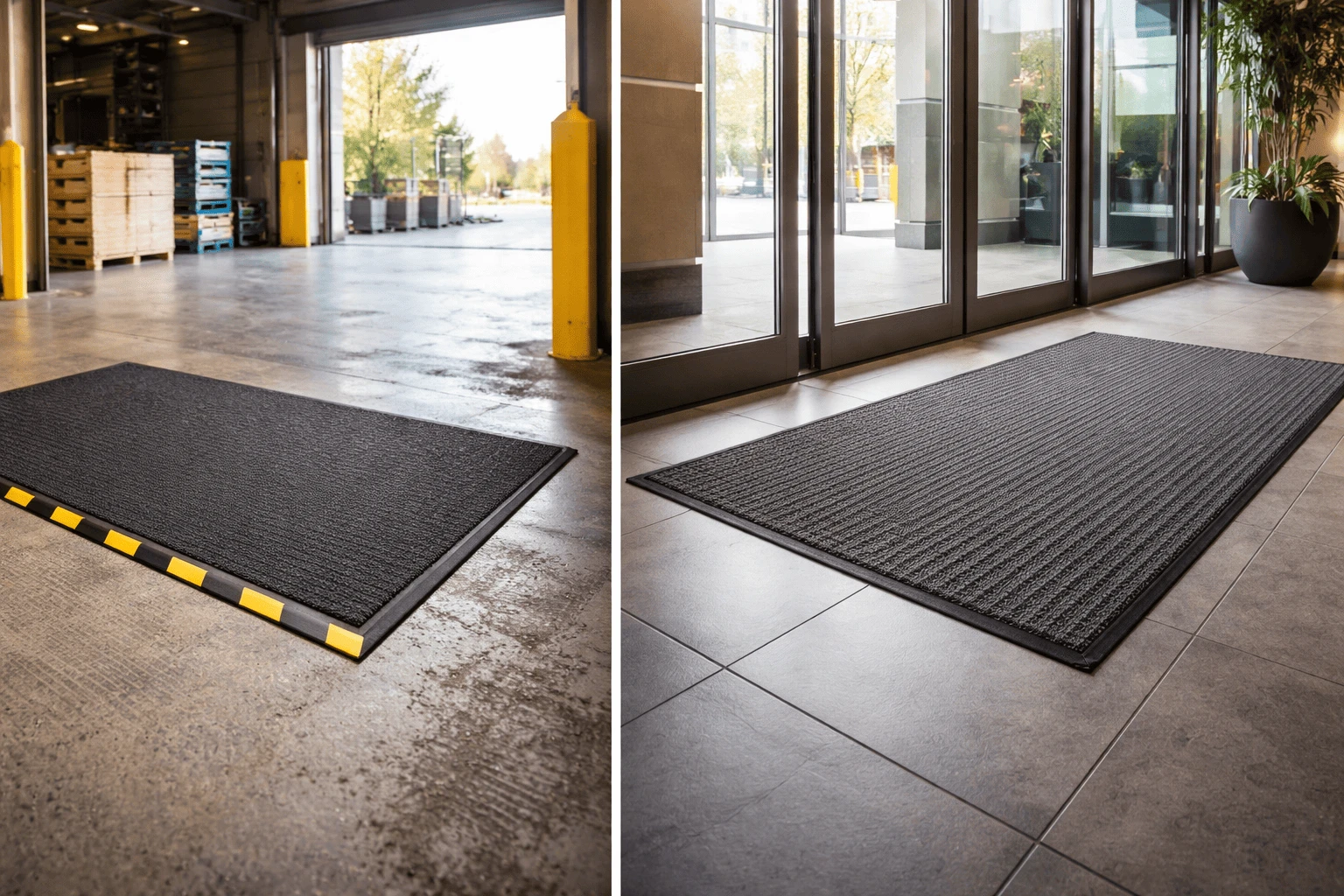
Entrance mats act as the first line of defence, removing debris from footwear and absorbing surface moisture before it spreads further inside. In high-traffic areas, mats that provide reliable traction and efficient dirt capture are essential. More robust designs are suited to service entrances or back-of-house zones where mud and debris levels are higher. Industrial-grade Floor Matting offers a practical solution, with materials and constructions designed to withstand heavy use while maintaining long-term performance. Traffic intensity remains the key consideration for commercial entrances—the busier the area, the more resilient the matting should be.
Door mats, often placed just inside entryways, provide additional absorbency and aesthetic consistency. Solutions focused on moisture absorption help minimise wet areas across tiled or laminate floors, and long runner-style mats can protect larger internal spaces beyond the immediate doorway. In commercial settings, layering an external scraper mat with an internal absorbent mat often produces the best long-term results, combining dirt capture with water management.
Industrial environments operate under far more demanding conditions than typical commercial spaces. Warehouses, factories, and distribution centres face constant foot traffic, pallet movement, and exposure to dust, moisture, and sometimes oils. In these settings, lightweight mats deteriorate quickly. Industrial matting is constructed with thicker rubber compounds and reinforced structures to withstand prolonged stress.
Barrier mats are particularly common in industrial facilities because they provide both scraping performance and high levels of slip resistance. Grey or coloured heavy-duty barrier mats are suitable for warehouse entrances or internal walkways where resilience is essential. Some designs also allow for visual zoning or colour distinction to improve safety and organisation within large facilities. General-purpose coverage can be achieved with mats engineered to cope with consistent industrial use, while specific high-grip options offer enhanced stability in areas with elevated slip risk.
The difference between industrial and commercial mats lies largely in construction. Industrial mats typically feature:
Higher-density rubber materials
Increased thickness
Stronger resistance to wear and compression
Enhanced slip-resistant surfaces
While commercial mats are effective for customer-facing spaces, industrial mats are better suited to environments involving equipment, heavy footwear, and continuous operational activity. Selecting industrial-grade matting reduces the likelihood of curling edges, surface breakdown, and frequent replacement.
In homes and smaller commercial settings such as clinics or guesthouses, comfort and absorbency become more prominent factors. Although durability remains important, the emphasis often shifts towards softness underfoot and ease of cleaning.
Bathrooms are among the highest slip-risk areas in any property. Anti-slip bath mats help prevent accidents while also improving comfort.
Soft, water-absorbent mats provide cushioning and ease of maintenance, ensuring that wet areas remain safe without sacrificing practicality. Coordinated mats around toilets and shower areas can offer a consistent grip while maintaining a tidy appearance.
Coir mats remain a popular choice across the UK due to their natural scraping ability. Made from coconut fibres, they effectively remove mud and debris before it enters the property.
External coir mats perform best when paired with internal absorbent mats, providing comprehensive floor protection while maintaining a traditional aesthetic. Thickness and fibre density can vary to suit sheltered or exposed entrances.
Selecting appropriate matting begins with assessing your specific environment:
Traffic Levels: High-traffic industrial settings require heavy-duty rubber barrier mats, while moderate-traffic commercial spaces benefit from layered entrance and door mat systems. Homes typically require absorbent and easy-to-clean options.
Location: Outdoor entrances demand strong scraping ability, while indoor areas need absorbency and reliable grip.
Moisture Exposure: Wet environments, such as bathrooms or warehouse loading areas, should prioritise slip resistance and water management.
Maintenance Requirements: Washable mats may suit hospitality or healthcare settings, while industrial rubber mats can often be cleaned with basic equipment.
By evaluating these factors carefully, you can ensure the matting selected aligns with both safety and longevity requirements.
The choice of floor matting—commercial, industrial, or home—depends on usage requirements. Commercial environments typically need entrance systems that combine absorbency with a neat appearance, whereas industrial sites call for heavy-duty rubber matting that withstands constant wear. Residential and light-commercial settings focus on comfort and safety features like moisture management and slip resistance. A careful evaluation of traffic and environmental factors helps extend lifespan and maintain safety. Additional details are available at commercialstrips.co.uk.

Digital marketing professional specializing in SEO, guest blogging, and content strategy. Helping brands publish high-quality content on authoritative UK websites
In industrial settings, webbing is one of those “small” components that quietly holds ev
19 February 2026
Heavy-duty industrial environments place constant demands on materials. From factory floors and ware
14 February 2026
Modern UK businesses operate in environments where efficiency, durability, and cost control are cons
13 February 2026
Be the first to share your thoughts
No comments yet. Be the first to comment!
Share your thoughts and join the discussion below.


11.webp&w=3840&q=75)

.webp&w=3840&q=75)





.webp&w=3840&q=75)