Wednesday, July 15, 2026

* All product/brand names, logos, and trademarks are property of their respective owners.
Heavy-duty industrial environments place constant demands on materials. From factory floors and warehouses to food production units and engineering facilities, rubber sheeting plays a critical role in protecting surfaces, absorbing impact, reducing vibration, and maintaining operational efficiency.
However, not all rubber sheets are designed to perform under sustained pressure. Choosing the correct material involves more than selecting a thickness or focusing on cost. It requires understanding load requirements, environmental exposure, compliance standards, and long-term durability.
In UK industrial settings, fluctuating temperatures, moisture exposure, and strict safety expectations mean that rubber sheeting must be carefully specified. The right decision improves lifespan, reduces downtime, and supports safer working conditions, while the wrong choice can result in premature wear, structural failure, or unnecessary replacement. This guide explores how to choose the right rubber sheet for demanding applications, focusing on practical considerations that help you make a specification-led decision.
The term “heavy-duty” refers to performance under sustained mechanical or environmental stress. In industrial settings, rubber sheets are often required to withstand weight-bearing loads, abrasion, vibration, oil exposure, or outdoor conditions.
In warehouses and production environments, rubber sheets are frequently used beneath machinery, along walkways, or as protective barriers. These applications require materials capable of resisting tearing, deformation, and surface wear.
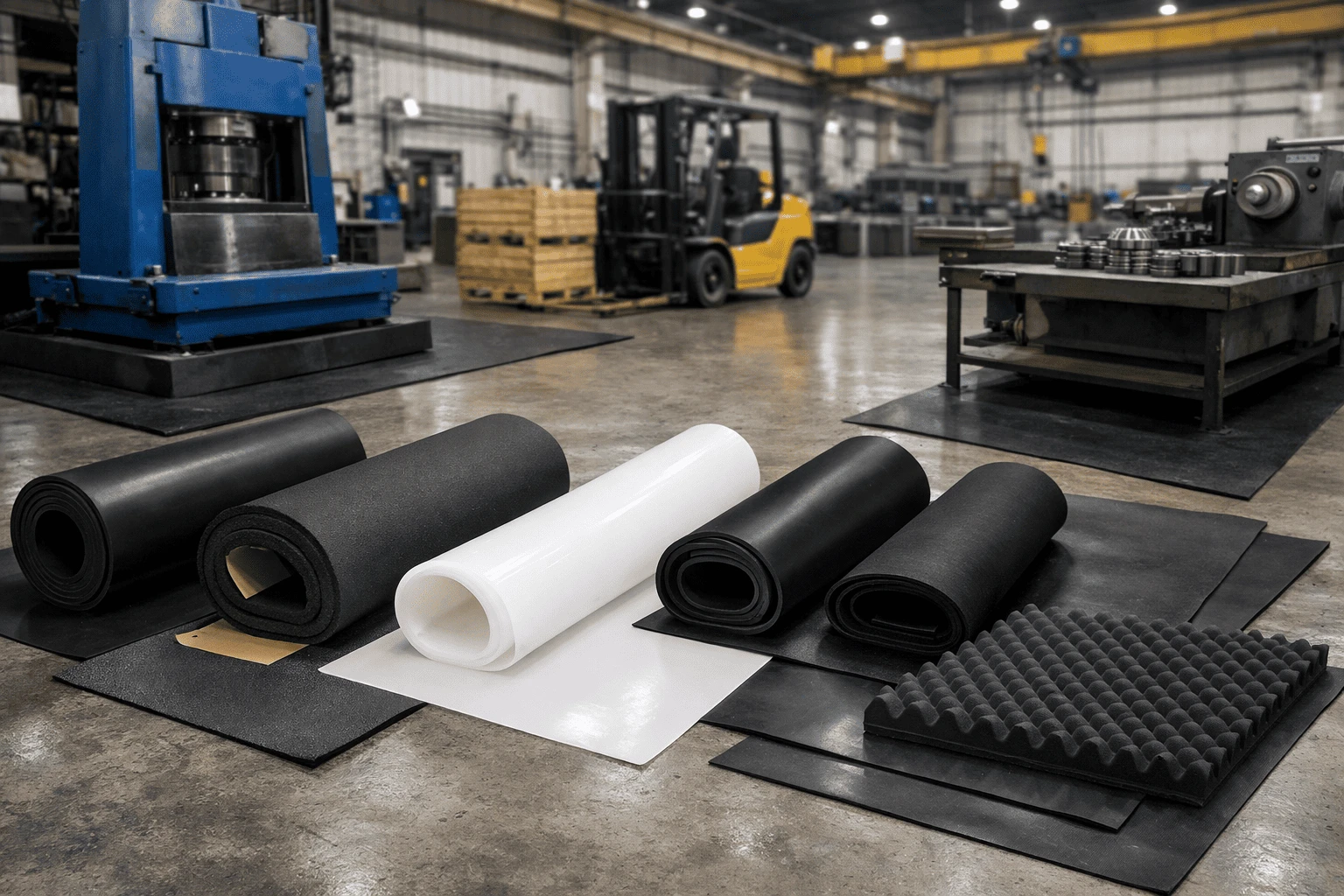
Reinforced rubber sheets with internal layers help prevent splitting under repeated mechanical strain, making them suitable for machinery bases or high-traffic zones. Thicker solid sheets are preferred where impact absorption is required, protecting flooring from forklifts, pallet trucks, or heavy components. Selecting the correct density and thickness ensures consistent performance rather than premature compression.
Environmental exposure is another defining factor. Heavy-duty rubber sheets must often endure oil splashes, cleaning agents, moisture, and fluctuating UK weather conditions. For outdoor or damp environments, sheets made from ethylene propylene diene monomer (EPDM) provide stability and durability, helping maintain integrity despite exposure to moisture and temperature changes. Rubber compounds with oil resistance are essential around engines or mechanical equipment to prevent swelling or material breakdown. Matching environmental demands to material properties is critical for long-term reliability.
Some sectors require rubber sheets that maintain structural integrity at elevated temperatures or comply with hygiene standards. Manufacturing, food production, and technical assembly areas often specify silicone-based sheets for temperature resilience and cleanliness. Here, heavy-duty performance is defined not only by strength but also by stability and regulatory compliance.
Neoprene is a versatile material used in industrial rubber sheeting. It combines flexibility, moderate oil resistance, and durability.
Solid neoprene sheets are commonly used for gaskets, vibration pads, and machinery support. Their compressive strength allows them to maintain shape under load, making them effective beneath equipment bases. These sheets support general industrial applications where moderate oil contact and environmental exposure occur. Common applications include:
Equipment mounting pads
Protective linings
Sealing strips
Workshop surface protection
The balance between firmness and elasticity makes neoprene a dependable all-round option without relying on product-specific promotion.
Sponge neoprene, with its cellular structure, allows for controlled compression. It is suitable for sealing enclosures or dampening vibration. Its compressibility provides cushioning between metal components, vibration reduction, and protective edge lining in industrial setups. Choosing between solid and sponge formats depends on whether structural support or compressible sealing is the primary objective.
Certain industrial applications require performance beyond general-purpose rubber. High temperatures, hygiene-sensitive processes, and specialist technical environments often demand silicone-based materials.
Silicone rubber remains stable across extreme temperature ranges, retaining flexibility without cracking or degrading. This makes it suitable for food and beverage production, pharmaceutical environments, and high-temperature sealing systems where hygiene and compliance are essential.
Some manufacturing settings require silicone sheets with specific electrical properties. Electrically conductive silicone sheets ensure safe operation in electronic assembly areas and specialist manufacturing zones. Precision and material reliability are central to controlled environments, supporting operational safety and equipment compatibility.
Beyond load-bearing and temperature resistance, industrial environments often require impact absorption and acoustic management.
In manufacturing and industrial settings, Rubber Sheets are commonly used as a resilient material to protect floors and equipment bases. Their composition ensures consistent performance even under ongoing stress, exposure to moisture, and temperature fluctuations.
Typical applications include:
Floor overlays
Machinery base layers
Conveyor skirting
Protective surface barriers
Selecting an appropriate thickness ensures adequate shock absorption without compromising stability.
Industrial noise can affect comfort, concentration, and compliance. Acoustic solutions such as sound-absorbing foam sheets are installed to reduce echo and airborne sound within large spaces. These materials contribute to vibration management and overall workplace improvement, enhancing operational efficiency without relying on promotional language.
Thickness selection should align with load intensity and frequency of use. Heavier machinery or high-traffic areas require greater material depth to prevent premature compression. Wider sheet formats reduce joins and weak points, while narrower widths allow precision placement in technical environments.
Key factors to consider:
Weight and frequency of load
Environmental exposure
Installation method
Maintenance expectations
Balancing these factors ensures efficient material performance throughout its intended lifespan.
A practical, performance-focused approach is essential when selecting rubber sheets for demanding applications. Factors such as load, environment, temperature, and compliance requirements guide material suitability. Reinforced sheets maintain structural integrity, weather-resistant compounds extend durability, and sponge or acoustic options contribute to vibration control and comfort. To support informed decisions, businesses can review comprehensive material information at commercialstrips.co.uk, which provides detailed specifications and industrial solutions across various categories.

Digital marketing professional specializing in SEO, guest blogging, and content strategy. Helping brands publish high-quality content on authoritative UK websites
In industrial settings, webbing is one of those “small” components that quietly holds ev
19 February 2026
Floor matting plays a far more important role than many people realise. Beyond simply covering the f
16 February 2026
Modern UK businesses operate in environments where efficiency, durability, and cost control are cons
13 February 2026
Be the first to share your thoughts
No comments yet. Be the first to comment!
Share your thoughts and join the discussion below.


11.webp&w=3840&q=75)

.webp&w=3840&q=75)






.webp&w=3840&q=75)