Monday, October 19, 2026

* All product/brand names, logos, and trademarks are property of their respective owners.
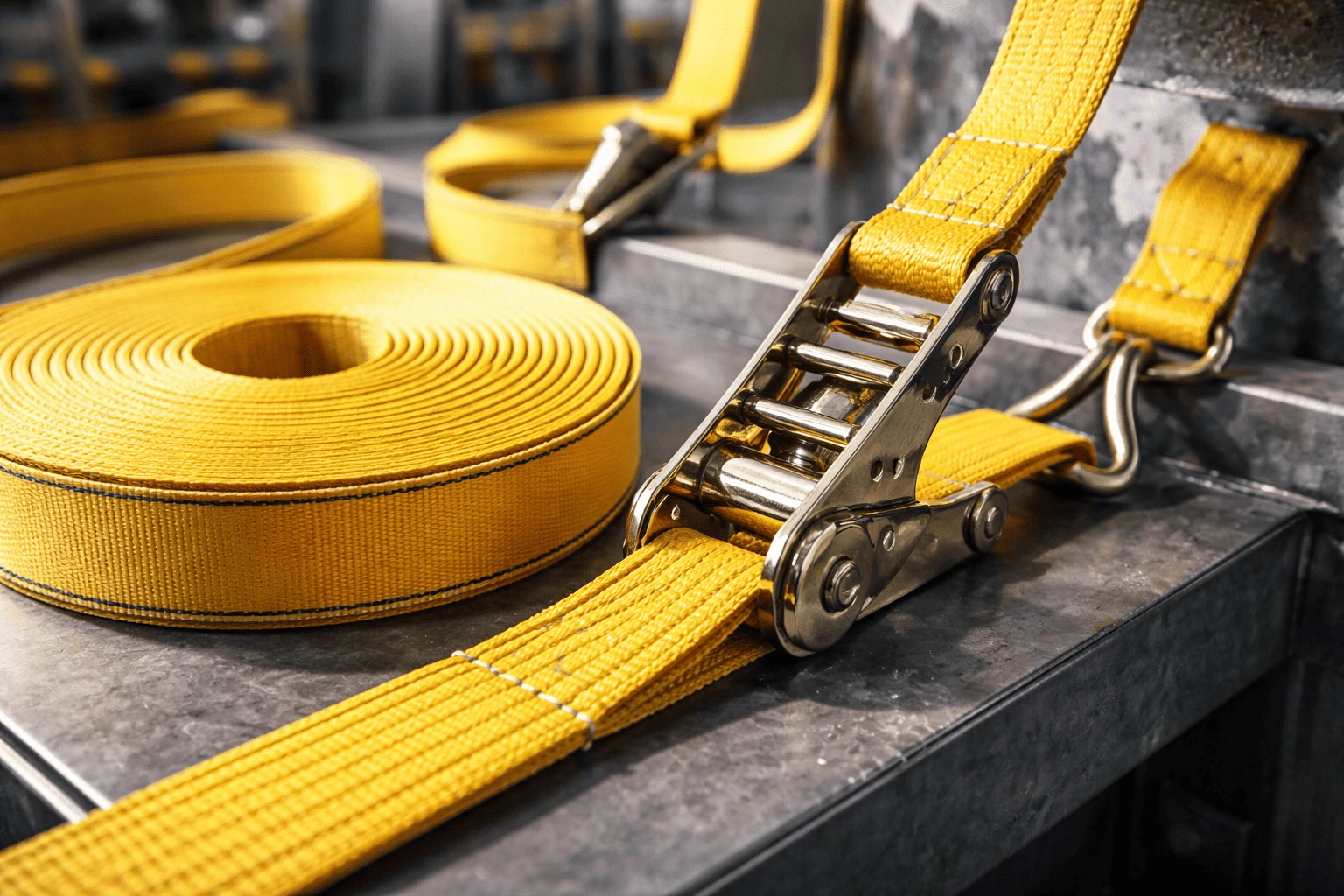
In industrial settings, webbing is one of those “small” components that quietly holds everything together—until it doesn’t. When the wrong webbing is chosen, the problem usually shows up at the worst possible time: straps fray earlier than expected, edges start to split, performance drops in wet weather, or a once-reliable setup suddenly feels risky. And in the UK especially, where outdoor conditions can swing from damp and cold to bright UV bursts in the same week, durability isn’t a nice-to-have—it’s part of doing the job properly.
What makes webbing tricky is that people often shop for it like it’s a simple, one-size-fits-all item. Industrial buyers and accessory makers know that strength and durability are only half the story. The real win is choosing webbing that matches the application: how it will be used, how often it will be under tension, what it will rub against, and what kind of environment it will live in. Webbing used for frequent securing tasks will face different stresses than webbing used mainly for reinforcement or support. Even the same “strong” material can behave very differently depending on weave, thickness, width, and how it’s finished.
Thinking in terms of “other webbing” can be helpful when planning industrial accessories. It’s a practical way to group the types of webbing used for everyday industrial needs—without assuming a single type will cover every job. Whether managing supplies for a production line, building accessories, or stocking a workshop, the goal is the same: pick webbing that holds up consistently, lasts longer, and avoids unnecessary replacements or safety concerns. In this guide, we’ll walk through strength in a simple, no-jargon way, then move into durability and functional applications. You’ll also see where longer-format supply choices can make sense for operations that value consistency, and how finishing details can support specific use cases without complicating the selection process.
When people say they need “strong webbing,” what they usually mean is that it should hold reliably day after day, without stretching too much, snapping, or wearing out early. That’s a fair goal—but strength isn’t just one number, and it isn’t always the same as “best.” In industrial accessories, the strongest option on paper can sometimes be the wrong fit if it stretches too much, reacts poorly to moisture, or wears down faster in real conditions. The smart approach is matching strength to real-world use, so you get both performance and longevity.
Here are two essential terms explained simply:
Tensile strength – the maximum force a webbing can handle before breaking.
Working load – the practical limit for everyday use, reflecting what the webbing can safely handle under typical conditions.
Webbing rarely experiences perfect, straight tension. It often twists, rubs against edges, or loops around hardware, concentrating stress. Focusing only on tensile strength can be misleading. A webbing might look strong in lab conditions but struggle when used around abrasive surfaces or under repeated movement.
Ask yourself:
What is the maximum load this setup could see in normal and peak use?
How frequently will it be loaded and unloaded?
Will it be used in wet, oily, dusty, or outdoor conditions?
Could the webbing rub against sharp edges or rough surfaces?
If your answers involve frequent use, variable conditions, or movement, a stronger safety margin and a type that holds performance over time is ideal.
In UK industrial applications, polyester webbing is often chosen because it balances strength and stability predictably. Teams value consistency—avoiding surprises like excessive stretch, uneven handling, or early wear in mixed conditions.
Polyester is preferred for:
Lower stretch under tension
Dependable performance outdoors
Consistent behaviour for repeated securing or reinforcement tasks
Cutting, stitching, or threading webbing around hardware requires materials that behave consistently. Other Webbing serves as a practical option, offering stable performance that supports accurate work and smoother handling across multiple tasks.
Webbing almost never fails in the middle first. Common stress hotspots include:
Edges and corners prone to abrasion
Stitching zones where the weave is compressed
Contact points that repeatedly rub against rough surfaces
Bend points that are constantly folded or creased under tension
To prevent early failure, match webbing choice to the job instead of focusing purely on “strength”:
If abrasion is likely, choose a width and weave that resists edge wear
If stitching is involved, ensure thickness suits the pattern and load direction
If frequent folding occurs, avoid choices that crease and weaken quickly
Checking the first few potential failure points early—like fraying or flattening—can help identify whether adjustments are needed.
While strength gets attention, durability determines whether webbing remains reliable over time. Industrial webbing is dragged, folded, tensioned, and exposed to moisture, grime, or repeated handling. The “right” choice keeps its shape and performance even under harsh conditions.
For UK industrial use, consider:
Moisture & damp exposure: Stored in warehouses? Outdoors? Rain or condensation?
UV exposure: Near windows, vehicles, or outdoor sun?
Abrasion & friction: Contact with metal edges or rough surfaces?
Oils, chemicals, or grime: Workshop residues, lubricants, or cleaning agents?
Heat and repeated bending: Folded, tensioned, and released often?
If your use case involves two or more stress factors simultaneously (e.g., damp + abrasion, UV + bending), a larger durability margin is recommended to reduce replacement and maintenance needs.
Webbing usually serves one of three roles in industrial accessories:
Securing and restraint – Requires controlled tension and dependable holding. Consistency is key to prevent “creep” under repeated use.
Reinforcement and support – Supports edges, stabilises builds, or adds structure. Durability is often more critical than raw load capacity.
Operational efficiency and standardisation – Standard cut lengths and consistent feel reduce workflow friction. Long-roll webbing options support repeatable builds and smoother operations without being “featured” as a product.
Not all requirements are structural. Finishing can affect visibility, cleanliness, and protection. A well-applied surface layer ensures components stay intact under repeated handling, making maintenance easier and edges cleaner.
Subtle finishing choices can influence performance without being highlighted as a selling point. For example, using a protective adhesive or trim helps accessories endure daily use and maintain consistent quality across multiple builds
Effective webbing selection for industrial accessories depends on practical requirements, including load forces, frequency of use, and environmental challenges. Even minor abrasion, moisture, or repeated bending can reduce performance over time.
Key considerations:
Observe stress points at edges, stitching, and contact zones.
Choose webbing that supports repeatable handling and standardised workflows for dependable results.
For additional information on webbing suitable for industrial applications, straptapes.co.uk serves as a resource for reference and material guidance.

Finn a writer who enjoys creating simple, expressive, and engaging content. I like turning everyday ideas into clear and meaningful writing that feels natural, fresh, and easy for readers to connect with.
When building a solar power system, choose every part carefully. The solar cable needs special atten
22 September 2026
The selection of the correct diesel injector system goes beyond technology. It has a direct effect o
18 August 2026
Modern UK businesses operate in environments where efficiency, durability, and cost control are cons
13 February 2026
Be the first to share your thoughts
No comments yet. Be the first to comment!
Share your thoughts and join the discussion below.



.webp&w=3840&q=75)