Monday, October 19, 2026

* All product/brand names, logos, and trademarks are property of their respective owners.
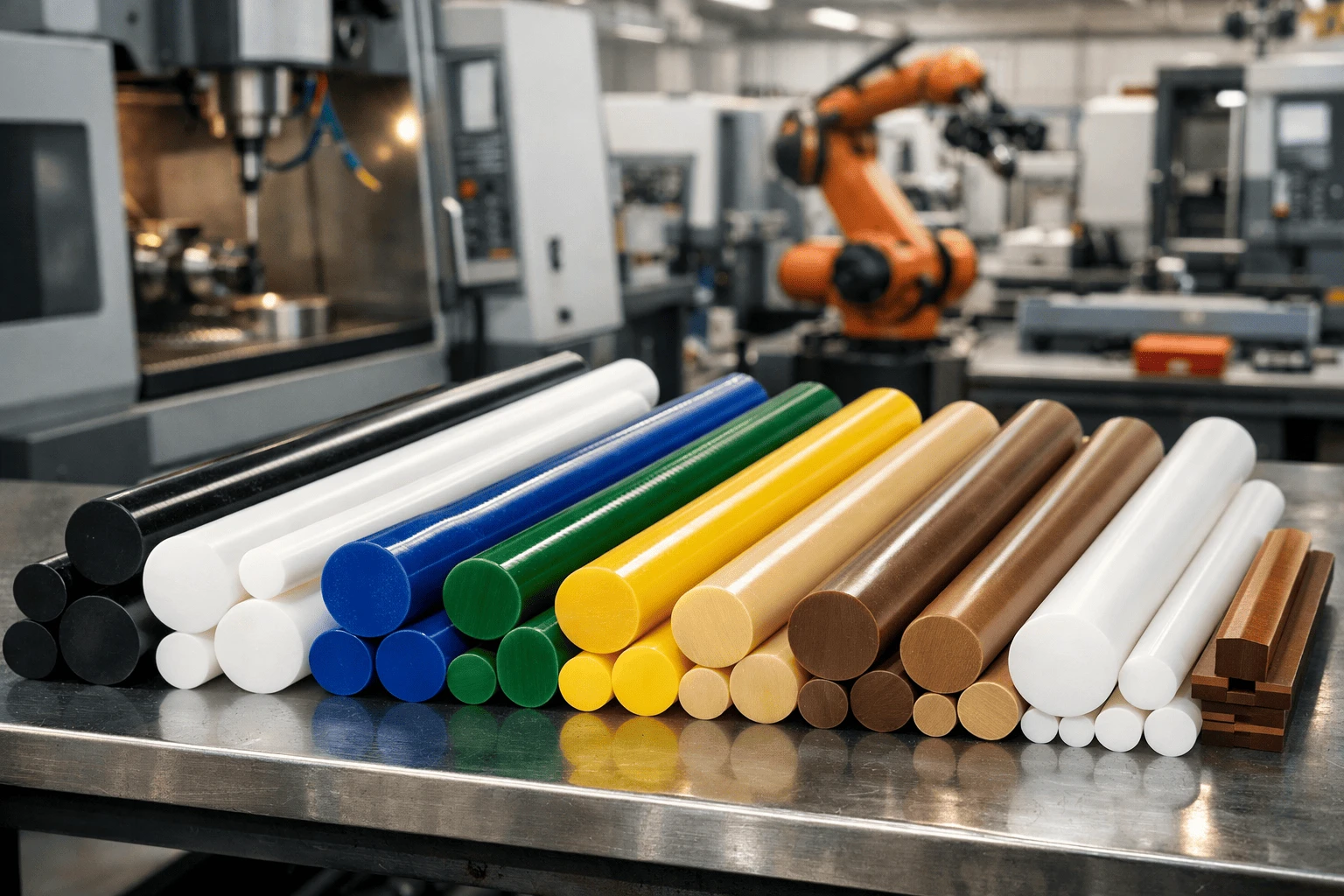
Across the UK manufacturing sector, material selection is undergoing a quiet but significant transformation. While metal has long been the default choice for structural and mechanical components, many manufacturers are now exploring engineering plastics to meet modern production demands. This shift is driven not only by cost considerations but by the need for efficiency, reliability, and adaptability in increasingly automated environments.
Advances in polymer science have produced plastic rods capable of replacing metal in a wide range of applications—from precision components to heavy-duty wear parts. As production systems evolve to support automation, AI-driven decision-making, and lean manufacturing principles, plastic rods are becoming a technically sound alternative.
Modern manufacturing prioritises consistency, efficiency, and long-term performance. In many of these areas, plastic rods offer advantages that traditional metals struggle to match.
Plastic rods are significantly lighter than steel or aluminium, which reduces handling effort and strain on machinery. In CNC machining and automated systems, this lower mass enables faster movement, reduced inertia, and less wear on mechanical components. Plastics also machine more easily than metal. Lower cutting forces, reduced heat generation, and minimal tool wear allow for shorter cycle times and more predictable machining outcomes—particularly valuable in high-volume production.
While initial material costs vary, manufacturers increasingly assess materials based on total lifecycle cost. Metal components often require lubrication, corrosion protection, and frequent maintenance. Many engineering plastics are inherently corrosion-resistant and, in some cases, self-lubricating, which reduces maintenance interventions and downtime.
Unlike metal, plastic rods do not rust or oxidise. This makes them well-suited to wet, chemically aggressive, or hygiene-critical environments such as food processing, water treatment, and chemical handling. Their resistance to environmental degradation helps maintain performance over longer service periods.
Automated and AI-supported manufacturing systems depend on predictable material behaviour. Plastic rods offer uniform material properties and stable machining characteristics, making them ideal for data-driven production environments and predictive maintenance strategies.
In applications where accuracy and repeatability are critical, engineering plastics are increasingly used in place of machined metal components.
Acetal (POM) rods are valued for their excellent dimensional stability, low friction, and machinability. They are commonly used in gears, bearings, rollers, and sliding components where tight tolerances are essential. Smaller diameters, such as Acetal Round Plastic Rod Natural 5mm Dia, are well-suited to intricate precision parts, while larger formats like Acetal Round Plastic Rod Black 28mm Dia support more demanding mechanical applications. Compared to metal, acetal provides quieter operation and consistent performance without corrosion concerns.
PET rods offer high stiffness and very low moisture absorption, making them suitable for components that must maintain dimensional accuracy over time. They are often used for wear strips, guides, and structural parts exposed to variable environmental conditions. Diameters such as PET Plastic Rod Natural 16mm Dia support precision-guided applications, while larger sizes like PET Plastic Rod Natural 60mm Dia are used where added rigidity is required.
For environments where exposure to chemicals or moisture is unavoidable, plastic rods provide a practical alternative to corrosion-prone metals.
Polypropylene rods offer excellent resistance to a wide range of chemicals and perform reliably in wet conditions, making them suitable for chemical processing, water treatment, and food-related manufacturing where metal components may corrode or degrade. For various applications, mid-range diameters such as 55mm are commonly used for machined components, while larger sizes up to 225mm support fabricated or structural parts. Solutions like Plastic Rods provide engineers with versatile materials that maintain dimensional stability and durability in demanding industrial environments.
Rigid PVC rods offer chemical resistance and structural reliability in lower-load applications. They are frequently used for enclosures, supports, and fabricated components where ease of machining and long-term durability are required.
High-friction environments place significant stress on metal components. Certain plastic rods are specifically engineered to manage wear without continuous lubrication.
Nylon rods provide an excellent balance of strength, wear resistance, and impact performance. Nylon 6.6 Plastic Rod Natural 110mm Dia is commonly used in heavy-duty applications, while smaller diameters such as Nylon 6 Plastic Rod Black 12mm Dia, are used for precision components.
Compared to steel, nylon reduces noise and vibration while extending service life in moving assemblies.
Oilon rods are a modified nylon containing internal lubricants. This makes them suitable for continuous-operation environments where external lubrication is impractical. They are frequently used in bearings, slides, and wear pads.
Polyurethane rods are selected for applications requiring resilience and shock absorption. With a Shore hardness of 90A, they provide controlled flexibility, helping protect machinery from impact-related damage.
Material handling systems demand components that can withstand constant movement with minimal friction.
HDPE rods combine toughness with low friction and moisture resistance. They are commonly used for guides, supports, and protective components in conveyor systems.
UHMWPE rods offer exceptionally low friction and high abrasion resistance. They are widely used in conveyor guides, wear strips, and sliding surfaces, where metal components would wear rapidly or require frequent lubrication.
Certain manufacturing environments require materials capable of performing under extreme thermal or mechanical stress.
PTFE rods provide excellent thermal stability and chemical resistance, making them suitable for seals, insulators, and sliding components exposed to heat or aggressive substances.
PEEK rods combine high strength, heat resistance, and dimensional stability. They are used in demanding sectors such as aerospace and automotive manufacturing, where metal replacement must not compromise performance.
Tufnol rods offer strong mechanical performance alongside electrical insulation properties, making them suitable for components where metal conductivity would be undesirable.
As manufacturing systems become more intelligent, material predictability is increasingly important. Plastic rods offer consistent behaviour that supports automated machining, robotic handling, and AI-based performance monitoring. Their lighter weight reduces mechanical strain, while self-lubricating and low-friction properties help minimise unexpected wear. These characteristics align well with predictive maintenance models and data-driven production planning.
The growing adoption of plastic rods reflects a broader evolution in manufacturing priorities. Where metal once dominated by default, plastics now offer tailored solutions that align with modern production requirements—precision, efficiency, and long-term reliability.
From wear resistance and corrosion protection to compatibility with automation and AI-driven systems, plastic rods provide manufacturers with flexible options for optimising performance across a wide range of applications. Understanding material behaviour and selecting the appropriate polymer is now a critical part of production strategy. Manufacturers looking for a reliable overview of available materials and applications can explore further insights at primeplasts.uk.

Writes about the intersection of technology, business, and innovation, with a focus on digital transformation and modern industry trends. Believes strong insights and clear communication are key to impactful content.
Choosing the right custom busbar manufacturer is not just about price and delivery times. Custom bus
3 September 2026
When you're looking for exterior cladding options for a business building, you may have heard the te
20 August 2026
You may walk past any flagship store today and see the glass is doing something it never used to do.
12 August 2026
Be the first to share your thoughts
No comments yet. Be the first to comment!
Share your thoughts and join the discussion below.


.webp&w=3840&q=75)