Monday, October 19, 2026

* All product/brand names, logos, and trademarks are property of their respective owners.
Slips and trips are among the most common causes of injury in both domestic and commercial environments. According to the UK’s Health and Safety Executive (HSE), they account for a significant proportion of workplace accidents, with similar risks present in homes—particularly for children, older adults, and people with limited mobility.
Moisture tracked indoors, smooth flooring materials, spill-prone areas, and constant foot traffic all contribute to everyday slip hazards. These risks often go unnoticed until an incident occurs, despite being highly preventable. One of the most practical yet underestimated solutions is the use of anti-slip mats. When correctly selected and positioned, they provide immediate traction, absorb moisture, and remain stable underfoot—helping reduce accidents without disrupting how a space functions.
This article explores five key categories of anti-slip mats—Industrial, Entrance, Door, Coir, and Bath—highlighting how each addresses specific safety challenges across UK homes and commercial settings. The focus is on understanding risk, function, and suitability rather than aesthetics or brand-led choices.
Industrial environments such as warehouses, factories, workshops, and garages are dynamic by nature. Movement is constant, machinery operates continuously, and materials are frequently handled. When liquids, oils, dust, or debris enter the equation, floor surfaces can quickly become hazardous.
UK legislation, including the Health and Safety at Work Act 1974 and the Workplace (Health, Safety and Welfare) Regulations 1992, places a legal duty on employers to reduce foreseeable risks. Slips in industrial settings can result in serious injury, lost productivity, and legal repercussions if preventive measures are not in place.
Industrial anti-slip mats are designed to perform under pressure. Typically manufactured from robust materials such as rubber or reinforced polymers, they offer enhanced grip, resistance to movement, and durability in high-impact areas. Products within the anti-slip mats category are commonly used around machinery, loading bays, and workstations where surface conditions can change rapidly. Their purpose is functional: stabilising footing, improving traction, and supporting compliance with safety obligations without interfering with operations.
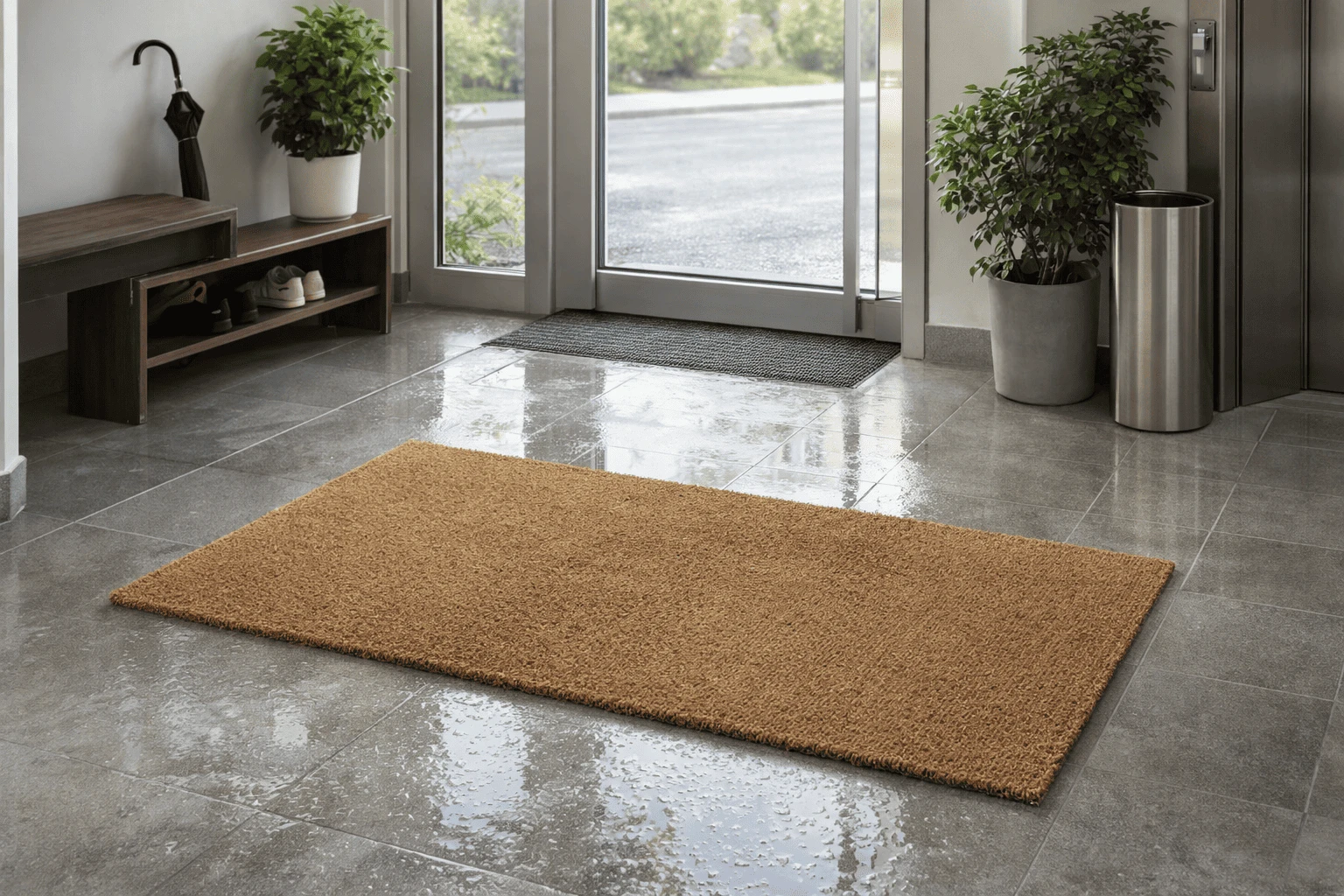
Entrance areas are transitional zones where outdoor conditions meet indoor flooring. In the UK, frequent rainfall, mud, and moisture mean doorways are often the first places where slips occur. In commercial premises, this risk is amplified by the volume of foot traffic and varying footwear. From a safety standpoint, poorly managed entrances can lead to accidents, floor damage, and increased cleaning demands—particularly in retail and office environments.
Entrance mats play a preventive role by capturing moisture and debris before it spreads further inside. Effective designs combine absorbent surfaces with anti-slip backing, helping maintain stable footing while protecting internal floors. Rather than being decorative additions, entrance mats act as control measures—reducing contamination, improving cleanliness, and supporting safer movement during wet conditions.
In residential settings, doorways often open directly onto hard flooring such as tile, laminate, or wood. These surfaces can become slick when wet, especially in busy households where children, pets, or mobility aids are present. Without adequate floor protection, everyday activities—coming in from the garden, school runs, or walking pets—can introduce slip risks that build up over time.
Modern door mats are designed to balance practicality with safety. Features such as non-slip backing, moisture absorption, and machine-washable materials make them suitable for regular domestic use. By keeping entry points dry and stable, these mats help reduce accidental slips while also limiting wear and tear on the flooring. Their value lies in consistency—providing protection every time the door is used, not just during extreme weather.
Outdoor steps, porches, and thresholds are often overlooked when assessing slip hazards. Stone, concrete, and tiled surfaces can become particularly slippery when wet, increasing the risk of falls before someone even enters the building. These areas are especially vulnerable during autumn and winter, when leaves, rain, and mud accumulate quickly.
Coir mats, made from natural coconut fibres, offer a practical solution for outdoor entry points. Their coarse texture helps remove debris from footwear, while backing materials such as latex or rubber reduce movement on smooth surfaces. Beyond their sustainability credentials, coir mats contribute to safety by improving traction at critical transition points, making them a reliable choice for covered outdoor areas.
Bathrooms consistently rank among the most hazardous rooms in the home. Smooth tiles, confined layouts, and frequent exposure to water create conditions where slips can occur quickly and unexpectedly. For older adults, young children, or anyone with reduced balance, bathroom falls can lead to serious injury—making preventative measures particularly important.
Bath mats designed with anti-slip backings and high absorbency help manage excess water while improving underfoot stability. Positioned near showers, baths, and sinks, they reduce the chance of slipping on wet tiles. While often small in size, these mats serve an important role in everyday risk reduction, contributing to safer bathroom environments without requiring structural changes.
Across both residential and commercial settings, anti-slip mats serve a practical purpose by helping to reduce everyday risks on smooth or moisture-prone floors. Their importance comes from how well they improve traction in areas where slips are most likely, rather than from appearance or brand.
Different types of mats—Industrial, Entrance, Door, Coir, and Bath—are designed for specific environments, yet all contribute to the same outcome: safer movement and fewer preventable incidents. Recognizing high-risk areas and understanding which mat features suit those conditions supports long-term safety and careful space management. For those interested in learning more about matting options and their characteristics, additional information is available at therubbermats.uk.

UK writer Evan covers home improvement, construction, and lifestyle trends, sharing practical insights for readers.
This guide cuts through the noise. Whether you are searching for a baby car seat in Dubai for the fi
7 September 2026
In UK industrial and commercial environments, selecting the right materials is crucial for ensuring
3 February 2026
Outdoor flooring safety is a key consideration for industrial and commercial sites across the UK. Ac
2 February 2026
Be the first to share your thoughts
No comments yet. Be the first to comment!
Share your thoughts and join the discussion below.


.webp&w=3840&q=75)