Tuesday, October 20, 2026

* All product/brand names, logos, and trademarks are property of their respective owners.
Choosing the right custom busbar manufacturer is not just about price and delivery times. Custom busbars are also used in various electrical applications: electrical panels, switchgear, power distribution systems, electric vehicle batteries, and energy storage systems, among others, meaning that their electrical and mechanical properties must also be taken into account.
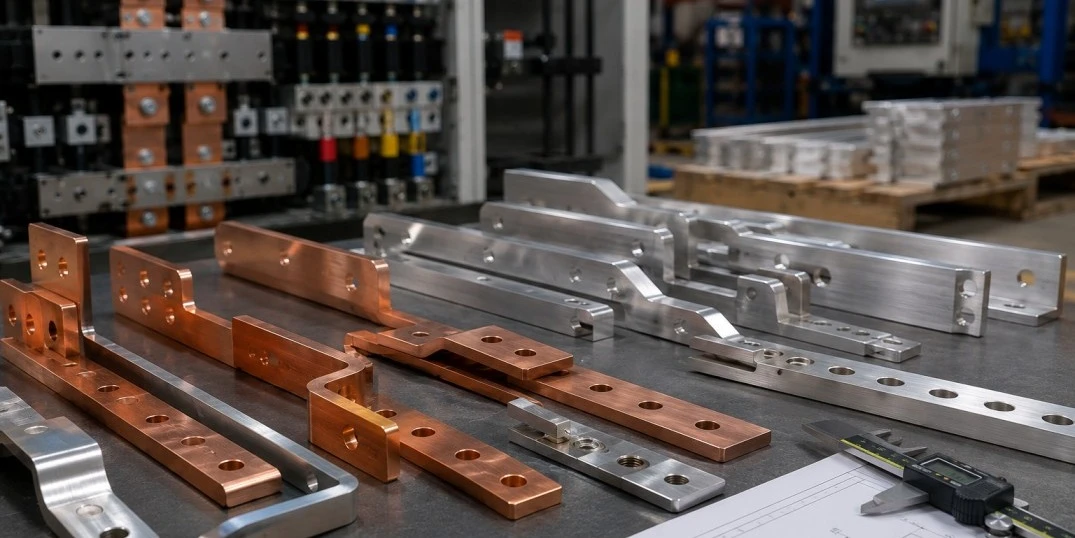
Any vendor may provide copper or aluminum busbars; however, they are not likely capable of consistently creating the correct position of holes, bends, thicknesses, plating, insulation, and surface treatment.
The process of questioning by B2B customers such as engineers, procurement departments, etc. can save them from fitment issues and unnecessary delays in production and expensive changes in design. Here are some questions to ask your Indian custom metal supplier.
Choosing your materials is critical for the electrical and mechanical performance of your product. Copper and aluminum differ widely in terms of conductivity, density, mechanical properties, and costs, and so it is essential to choose the material according to your application.
Do not stop by merely asking whether the vendor is dealing with copper or aluminum. Inquire about specifics like material type, thickness, width, and the documentation.
For critical projects, the buyers would also need to know how the material identification and traceability are managed in manufacturing.
Custom busbars are usually designed following the layout of the assembly. This means taking into account the locations of the holes, bends, bend angles, offsets, places of installation, and overall sizes.
You should ask whether the manufacturers can utilize the following:
A good production process should have revision control to prevent the production being carried out using an outdated scheme.
Measures for producing busbars using the necessary type of material and all parameters are possible, but such production will not function adequately unless tolerances are followed.
For example, we take one component with two drilled holes placed at a certain distance from each other. Even a small error in tolerances can make assembling different parts impossible.
You should ask about the measurement techniques employed by your manufacturer:
It would also be good to know if the producer performs batch and first-run testing.
It often happens that the custom busbars are produced by many manufacturing processes, not just simple cutting. The making of special samples may include a wide range of processes like cutting, punching, drilling, bending, forming, tapping, and chamfering.
By knowing the types of processes, the buyer may understand whether the supplier can handle the full geometry of the product.
For repeat orders, process consistency is highly important because it can greatly contribute to the ability of the manufacturer to repeat the approved design whenever necessary.
Surface finishing can be significant in electrical connections, protection against corrosion, contact performance, and actual application.
Buyers may require surface finishes, such as tin or nickel plating, based on designs. The required finish is determined based on the electrical interface, environmental conditions, contact specifications, and design specifications.
It is important to verify with the manufacturer the finishes provided and how the inspected finished product is rated. Where plating is specified on the drawing, it is important to know the areas of application that are to be plated and whether the dimensions are to be altered.
The current-carrying capacity of a busbar exclusively depends on the width of the busbar.
Additional relevant factors can include:
For instance, increasing the cross-sectional area reduces the electrical current of conductor wires, therefore reducing the temperature rise.
An experienced busbar manufacturer should be able to consider the application and drawing before arriving at the current rating for any busbar.
Busbar requirements for panels can differ greatly from those of battery interconnections.
In fact, manufacturers who cater to a variety of uses should understand that application-specific geometry is crucial.
Uses of busbars may include:
For instance, in battery applications, the busbar must ensure that the cells are in the necessary arrangement with all required connections. Meanwhile, for panels, the mounting and insulation requirements can have an even larger impact on the design.
Quality does not start at the last inspection.
Find out what the manufacturer’s inspection procedure is and if important features are being inspected during every stage of production.
Some examples of the stages that could be useful for control:
Incoming material → In-process inspection → Dimensional inspection → Surface-finish inspection → Final inspection
For parts produced according to drawings, inspecting the actual characteristics affecting assembly and operation is paramount.
When it comes to documentation, inspection documents and information about material properties are very helpful in building a quality system for B2B buyers.
A manufacturer that is capable of manufacturing a prototype may not be set up for large-volume production.
Find out how the supplier manages transitioning from one approved sample to repeat production.
Here is what you need to ask:
This is especially crucial when busbars are part of a continuous production line.
It’s important to evaluate the capacity of a manufacturer.
An efficient manufacturing company should have the expertise of the connections between the drawing of the required figure, the type of material used, the method of production, and the final utilization. This will be especially important when the design requires certain unusual bends, several holes, exclusive coating, insulation, and layouts of the battery.
If you are a company in search of a customized copper and aluminum busbar, you need to be ready to discuss drawings, materials, dimensions, finishing, and testing processes before production starts.
The aim is not only to find a manufacturer who can produce a metal bar. It is necessary to find one who is able to manufacture the precise details that your electrical installation requires.
Choosing the right custom busbar manufacturer involves a significant amount of work to make sure that price quotes represent more than just a dollar amount. Among other things, there are factors to consider that pertain to the manufacturer’s ability to deal with raw materials, interpret circuit diagrams, apply dimensional control and manufacturing processes, do finalization and specialized work, and perform quality checks.
Even a small production price advantage can turn out to be useless if dimensions are controlled poorly, resulting in parts that are rejected during assembly.
It is vital to ask the following questions before placing the order. Give the manufacturer the accurate drawing, precise specifications of materials, production tolerances, number of items to be produced, and the purpose of the product.

No bio available yet.
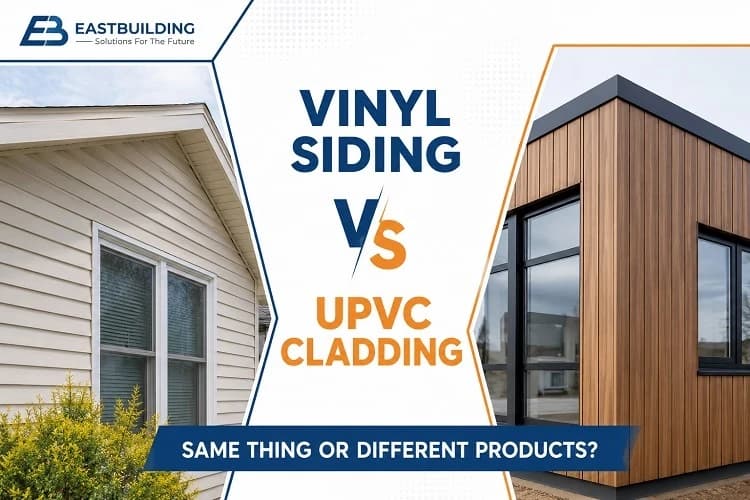
When you're looking for exterior cladding options for a business building, you may have heard the te
20 August 2026
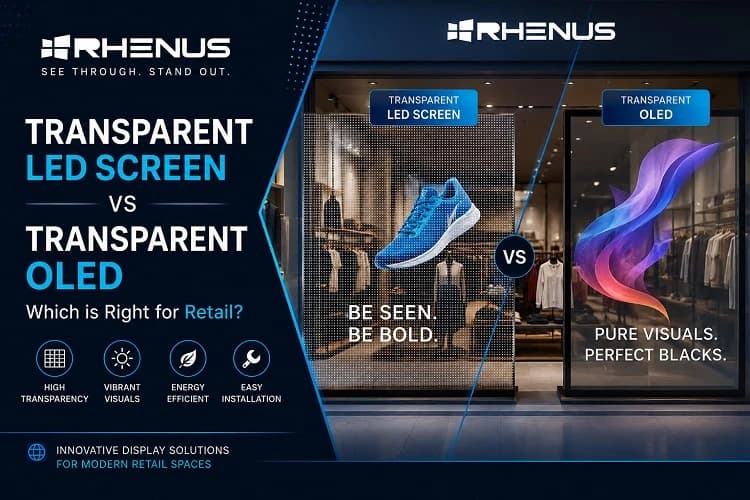
You may walk past any flagship store today and see the glass is doing something it never used to do.
12 August 2026
Managing industrial wastewater is becoming more challenging. Discharge regulations are getting stric
11 August 2026
Be the first to share your thoughts
No comments yet. Be the first to comment!
Share your thoughts and join the discussion below.


.webp&w=3840&q=75)