Saturday, October 10, 2026

* All product/brand names, logos, and trademarks are property of their respective owners.
When building a solar power system, choose every part carefully. The solar cable needs special attention. Many people do not realize how important the cable size is for their system’s performance and safety. You will probably need to choose between 4mm and 6mm Solar Cable. The main difference is simple: a 6mm cable is thicker than a 4mm cable. This extra thickness lets the 6mm cable carry more electrical power. It also loses less energy when electricity has to travel a long way. The 4mm cable works well for smaller systems or very short distances. Picking the wrong size will make your system work poorly. In bad situations, it can create a safety danger. Knowing exactly what your system needs is the most important first step.
A solar cable is a special wire made just for solar power systems. Its main job is to connect your solar panels to the inverter. This connection lets the direct current (DC) electricity from the panels flow to the inverter to be used. You cannot use normal electrical wires for this job. Solar cables are built to handle tough outdoor conditions for many years. They are made with materials that fight damage from sunlight, high heat, cold, and wet weather. This special construction makes them reliable and long-lasting.
Why can’t you use a normal cable? Solar power systems have special needs. The DC electricity they carry needs a cable with better insulation and specific safety features. Whether you use a 4mm or a 6mm cable, you must be sure it is approved for solar use. Using the right cable is a basic need for a system that is safe and works correctly.
The cable’s cross-sectional area, measured in square millimeters (mm ), plays a crucial role in electrical performance. It determines both the current-carrying capacity and the voltage drop over distance. A thinner cable, such as 4mm, offers higher resistance, which is acceptable for small systems or short wiring runs. However, in high-power applications or long-distance installations, this increased resistance can cause significant power loss and heat generation, lowering system efficiency and potentially affecting safety.
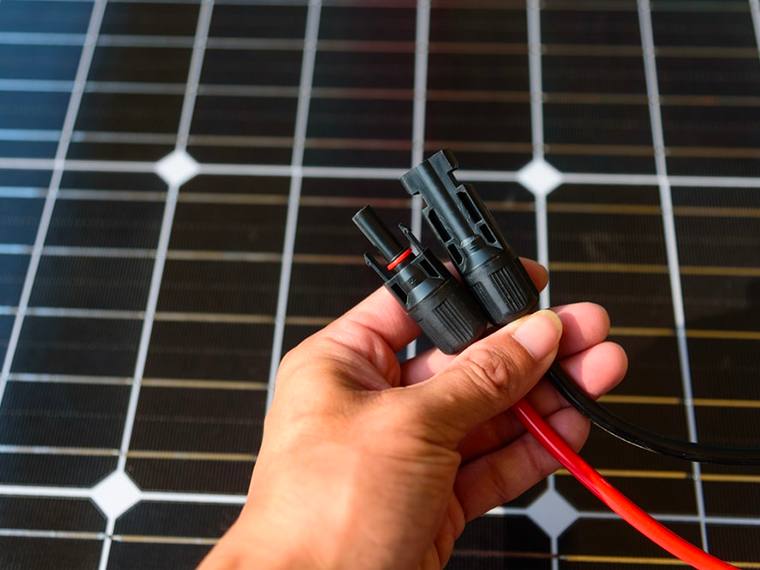
Current-carrying capacity, or ampacity, is the most current a cable can carry continuously without getting too hot. The thicker 6mm cable naturally has a higher ampacity than the 4mm cable.
In normal conditions, a single 4mm solar cable can usually carry between 55 and 60 Amps. A single 6mm solar cable, in the same conditions, can usually carry between 70 and 80 Amps. You should check the details from your cable maker, because these numbers can change. If your solar panels produce a high current, you must use a 6mm cable to handle that load safely and well.
Voltage drop is the loss of voltage that happens when electricity moves through a cable. This loss occurs because of the cable’s natural resistance. The longer the cable and the smaller it is, the bigger the voltage drop will be. A 4mm cable might be okay for a very short distance, but its voltage drop becomes too high over longer distances.
A 6mm cable, with its lower resistance, is much better at reducing voltage drop. This means more of the power your panels make actually gets to the inverter. Over the 25-year life of a solar system, even a small reduction in voltage drop saves a lot of energy, giving you a better return on your money.
The size of your solar setup is the main guide for picking a cable.
Tip: Never guess the cable size. Always do a voltage drop calculation when you plan your project. A wrong choice will waste your energy and put safety at risk.
The total power output of your solar panels is the starting point for your choice. You need to know the maximum current that will flow through the cable. You can find this by looking at the Isc (Short-Circuit Current) rating on your solar panels and using the needed safety factors.
For a small home system with low maximum current, a 4mm cable will often be enough. For a bigger system with high current, a 6mm cable is not a choice; it is a must. Using a cable that is too small for the current breaks electrical safety rules and puts your whole investment in danger.
The distance from the solar panels to the inverter is just as important as the current. Voltage drop gets bigger with cable length. A cable size that is perfect for a 5-meter run may be all wrong for a 20-meter run in the same system.
Good practice says to keep DC voltage drop between 1% and 3%. For longer distances, moving from a 4mm to a 6mm cable is the best way to stay in this range. It is often cheaper to use a bigger cable than to change the system to make the distance shorter.
The first cost of the project is a real worry for everyone. A 4mm solar cable costs less per meter than a 6mm cable. For a small, budget-friendly setup where the 4mm is technically okay, this cost saving makes sense.
But you must compare this short-term saving to long-term performance. A system with high voltage drop will make less electricity. The monetary value of that lost energy over 25 years will likely be more than the initial savings on the cheaper cable. Think of the cable as a long-term investment in your system’s output.
You must follow local electrical codes. Most places have strict rules for installing solar systems, including cable types and sizes. These rules are based on standards like the National Electrical Code (NEC) to make sure things are safe.
Using a cable that is too small and does not meet code can lead to a failed inspection, voided warranties, and refused insurance claims. Always make sure the solar cable you choose is properly certified for PV use (look for marks like TÜV EN 50618) and that its use follows all local rules. Hiring a qualified installer is the best way to make sure you follow the rules.
Pro Tip: Put safety and performance before first cost. The right cable size is a one-time cost that protects your system for its whole life.
The 4mm solar cable gives certain benefits for the right jobs.
The 6mm solar cable gives clear benefits for difficult installations.
Making the final choice means applying your system’s specific details.
Choose a 4mm Solar Cable when:
Choose a 6mm Solar Cable when:
Quick Tip: If your calculations put you between two sizes, it is always better to pick the larger 6mm cable. The small extra cost is cheap protection for guaranteed performance.

The selection of the correct diesel injector system goes beyond technology. It has a direct effect o
18 August 2026
In industrial settings, webbing is one of those “small” components that quietly holds ev
19 February 2026
Modern UK businesses operate in environments where efficiency, durability, and cost control are cons
13 February 2026
Be the first to share your thoughts
No comments yet. Be the first to comment!
Share your thoughts and join the discussion below.








.webp&w=3840&q=75)