Monday, October 19, 2026

* All product/brand names, logos, and trademarks are property of their respective owners.
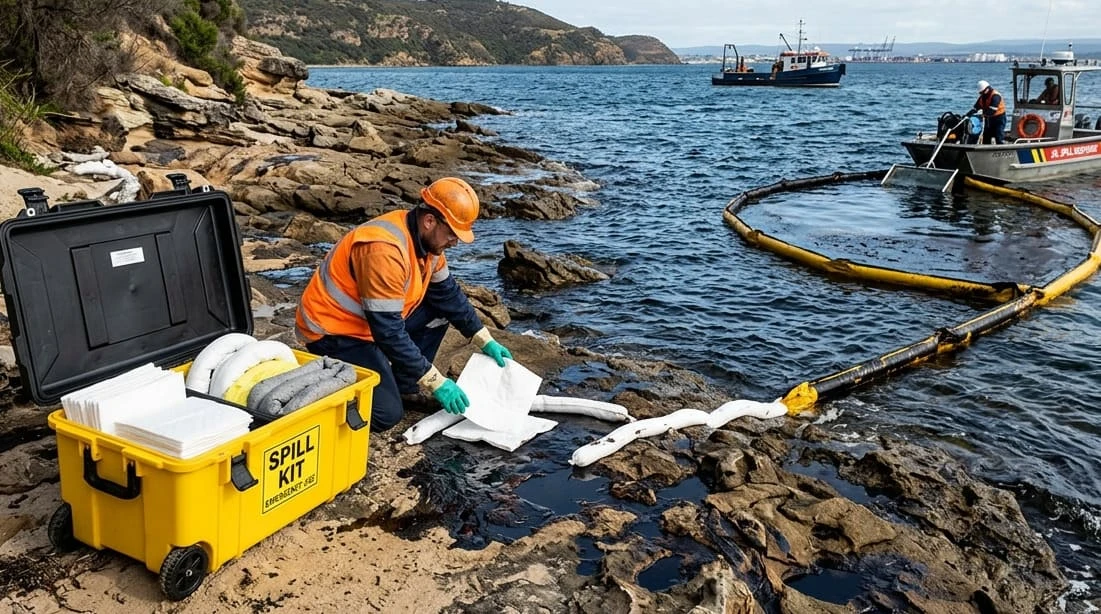
Oil spills in outdoor and marine environments can cause environmental damage, safety risks, and costly clean-up operations if not managed quickly. Unlike indoor settings, areas such as fuel storage yards, construction sites, marinas, and vessels are exposed to weather conditions and nearby water sources, increasing the risk of contamination. Choosing the right oil spill kit helps ensure spills are contained and absorbed effectively before they spread. By considering factors such as spill size, location, and response requirements, businesses can select a kit that provides reliable protection for both people and the environment.
Outdoor and marine spills require a different approach from spills that occur indoors. In these environments, rain, standing water, and direct contact with waterways can make standard absorbents less effective. This is where oil-only absorbents become important.
Oil-only absorbents are specifically designed to absorb hydrocarbons such as oil, diesel, petrol, lubricants, and other fuel-based liquids while repelling water. This allows them to continue working efficiently even when placed on wet ground or floating on the surface of water. As a result, they are widely used in ports, marinas, shipyards, fuel depots, and outdoor industrial facilities.
Common oil-only absorbent products found in spill kits include:
For marine applications, floating absorbent booms are particularly useful because they help contain oil before it spreads across larger areas of water. In outdoor locations, absorbent socks can be positioned around drains or equipment to limit the movement of spilled liquids. Selecting a spill kit that contains oil-only absorbents ensures responders can tackle oil spills effectively without absorbing large amounts of water, helping maximise absorbent capacity and improve spill control performance.
Selecting an oil spill kit starts with understanding the risks at your site. Factors such as spill volume, location, accessibility, and environmental sensitivity all influence the type of kit required.
Consider the largest amount of oil or fuel that could realistically be released. Small maintenance areas may only need a compact kit, while sites storing drums, tanks, or larger fuel volumes typically require greater absorbent capacity.
Spills behave differently depending on where they occur. Oil released near drains, waterways, docks, or vessel decks can spread quickly and may require faster containment measures than spills on open ground. Areas with multiple risk points may also benefit from having spill kits positioned in more than one location.
A spill kit is only effective if it can be accessed quickly. When assessing your site, consider:
Quick access can significantly reduce the impact of a spill.
Outdoor locations face additional challenges such as rain, wind, uneven surfaces, and nearby water sources. Sites operating near rivers, lakes, harbours, or coastal areas should prioritise spill kits designed for oil spills in wet conditions to help prevent environmental contamination.
Oil spill kits come in different formats to suit various environments and response requirements. Selecting the right type helps ensure spills can be controlled quickly before they spread.
Portable spill kits are ideal for vehicles, small vessels, maintenance teams, and sites handling limited amounts of oil. Their compact design makes them easy to store and transport, allowing for a rapid response when incidents occur.
Sites storing or using larger quantities of oil often require wheeled spill kits. These offer greater absorbent capacity and can be moved easily across industrial yards, fuel storage areas, warehouses, ports, and terminals.
Absorbent pads are commonly used to recover oil from equipment, hard surfaces, and water. Absorbent socks help contain spills by creating barriers around leaks, machinery, and drainage points, reducing the risk of further spread.
Marine locations such as marinas, docks, harbours, and waterways often benefit from floating absorbent booms. These products remain on the water's surface, helping contain and absorb oil before it disperses over a wider area.
Many outdoor and marine operators prefer spill kits containing a mix of pads, socks, and booms. This combination provides greater flexibility and allows responders to manage different spill scenarios using the most appropriate absorbent solution.
Choosing the correct spill kit size is just as important as selecting the right absorbent materials. A kit that is too small may become overwhelmed during an incident, while an oversized kit may result in unnecessary costs and storage requirements. The goal is to match the kit capacity to the level of risk present at the site.
Smaller oil spill kits are suitable for locations where only limited quantities of oil or fuel are handled. They are often used in maintenance vehicles, small workshops, and on board smaller vessels. These kits can provide a practical solution for dealing with minor leaks, drips, and small accidental spills before they become larger problems.
Medium-capacity kits are commonly used in commercial and industrial environments where moderate amounts of oil are stored or transported. They offer a balance between portability and absorbent capacity, making them suitable for a wide range of outdoor applications.
Typical locations include:
Sites handling significant volumes of fuel, lubricants, or hydraulic oils often require larger spill kits. These kits contain a greater quantity of absorbents and are designed to manage more substantial incidents.
High-capacity kits are frequently used in:
A useful approach is to consider the largest spill that could reasonably occur rather than the average spill size. This helps ensure adequate absorbent materials are available when they are needed most. Where multiple risk areas exist, it may be more effective to position several appropriately sized kits around the site rather than relying on a single large unit located far from potential spill sources.
A. Yes. Oil-only absorbents absorb oil while repelling water, making them suitable for marine environments.
A. Common users include marine operators, construction firms, manufacturers, transport companies, and fuel storage facilities.
A. They are highly useful for containing oil on water and limiting its spread.
Selecting the right oil spill kit for outdoor and marine environments requires careful consideration of spill risks, environmental conditions, and response requirements. Oil-only absorbents provide effective performance in wet conditions, while the correct combination of pads, socks, and booms can improve containment and recovery efforts.
Before making a decision, assess the potential spill volume, site layout, and proximity to water sources. It is also important to choose a kit that can be accessed quickly and contains the absorbents needed for the specific risks present. Businesses looking to compare suitable options can review different Oil Spill Kits designed for outdoor and marine applications.

In today’s digital-first world, mobile applications are no longer a luxury. They are a necessi
13 May 2026
Industrial accessories rarely fail because of one dramatic mistake. More often, performance declines
18 February 2026
Industrial magnets play a critical role in modern industry, supporting a wide range of applications
5 February 2026
Be the first to share your thoughts
No comments yet. Be the first to comment!
Share your thoughts and join the discussion below.


.webp&w=3840&q=75)