Saturday, October 10, 2026

* All product/brand names, logos, and trademarks are property of their respective owners.
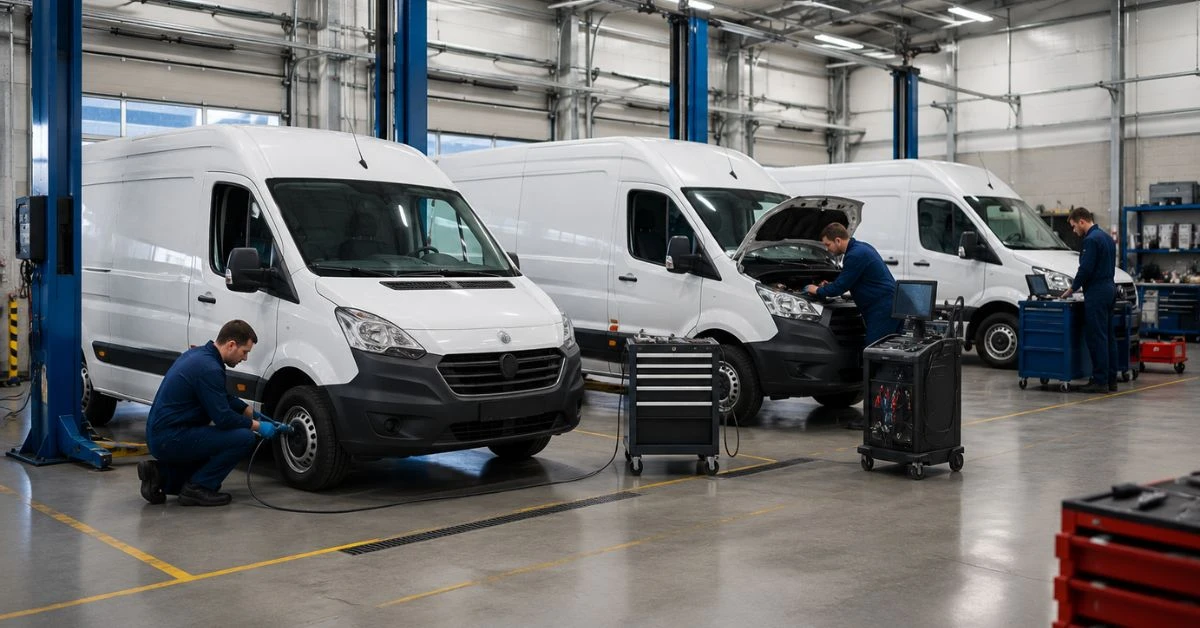
Fleet maintenance is the key to keeping your commercial vehicles on the road and your business running smoothly. Every hour a van sits broken, you lose money.
Every day a truck waits for repairs, your customers wait longer. Investing in professional fleet maintenance services helps you avoid these costly delays and keeps your operation profitable.
This guide explains how regular servicing improves vehicle reliability and business efficiency. You will learn about predictive maintenance, downtime reduction, safety compliance, and lower operating costs. A well-cared-for fleet keeps your business moving forward.
Fleet maintenance means keeping your commercial vehicles in good working order. It covers regular servicing, repairs, tyre checks, oil changes, and brake tests. The goal is simple: catch problems before they cause breakdowns. Good fleet management solutions do exactly that.
Waiting for a part to fail is expensive. A broken alternator costs more to fix than a worn one. A snapped belt causes more damage than a loose one. Preventive fleet maintenance fixes small issues before they become big, costly repairs.
Regular oil changes keep engines running smoothly. Brake inspections prevent dangerous failures. Tyre rotations extend their life. These small actions add up to big savings over time.
A reliable van starts every morning without trouble. A reliable truck finishes its route on time. Vehicle reliability comes from consistent care. When you service vehicles on schedule, they break down less often.
Fewer breakdowns mean fewer delays. Fewer delays mean happier customers. Reducing fleet downtime is the direct result of good maintenance habits. Every hour saved is money earned for your business.
Commercial vehicles face strict legal requirements. MOT tests are mandatory every year. Larger trucks need plating tests every 12 weeks. Tachographs must be calibrated every two years. Fleet safety compliance is not optional.
Failing a roadside check can cost you your operator's licence. It can also lead to heavy fines. Regular commercial vehicle maintenance keeps you on the right side of the law and your vehicles on the road.
Well-maintained vehicles cost less to run. Clean oil improves fuel economy by reducing engine friction. Proper tyre pressure lowers rolling resistance and saves petrol. Vehicle operating costs drop noticeably when maintenance is done right.
You will also see fewer major repair bills. Your tyres will last longer between changes. And when it is time to sell, well-kept vehicles fetch higher prices. The savings add up quickly.
A poorly maintained vehicle is dangerous. Faulty brakes cause crashes. Worn tyres blow out at high speed. Fleet safety compliance protects your drivers and other road users.
Drivers should check their vehicles before each trip. Look at the tyre tread and pressure. Test lights and indicators. Check fluid levels and wipers. Report any issues immediately. Fix them before the next journey. This simple routine saves lives.
Modern technology is changing fleet care. Sensors on engines, brakes, and tyres can now alert you before a part fails. Predictive maintenance uses real-time data to schedule repairs exactly when needed.
This approach is smarter than time-based servicing. It reduces unnecessary work. It also prevents unexpected breakdowns. Many fleet management solutions now include predictive features. They are worth the investment.
Reactive maintenance means fixing things after they break. The result is high repair costs, long downtime, and angry customers. Preventive maintenance means fixing things before they break. The result is lower costs, minimal downtime, and happy customers.
The choice is clear. Fleet maintenance done right is proactive, not reactive. Start a schedule today and stick to it.
Fleet maintenance is not an expense. It is an investment in your business. Preventive servicing stops problems early. Legal checks keep you compliant. Lower operating costs improve your bottom line. Less downtime means more deliveries and happier customers. Start your maintenance schedule today. Your vehicles, your drivers, and your customers will thank you.
Fleet maintenance means keeping commercial vehicles in good working order. It includes regular servicing, inspections, and repairs. Fleet maintenance prevents breakdowns and keeps your business moving.
Most fleets service vehicles every 6,000 to 12,000 miles. Time-based intervals of 3 to 6 months are also common. Preventive fleet maintenance follows a regular, consistent schedule.
Reactive maintenance fixes problems after they break. Preventive maintenance fixes them before they break. Reducing fleet downtime is much better with preventive care.
Regular servicing catches small problems early. This prevents major breakdowns. Vehicle reliability depends entirely on consistent, scheduled care.
Yes, well-maintained vehicles use less fuel. They also need fewer major repairs. Vehicle operating costs drop significantly with good maintenance habits.

I’m Henry Smith, a content writer and subject matter expert specializing in automobiles and real estate. I create informative, engaging, and easy-to-understand content, sharing practical insights, industry trends, and valuable knowledge with readers.
A flat tyre can disrupt your day without warning. Whether you're driving to work, heading on a road
30 July 2026
Car brakes are one of the most important safety systems in any vehicle, and regular inspection can h
28 July 2026
Be the first to share your thoughts
No comments yet. Be the first to comment!
Share your thoughts and join the discussion below.








.webp&w=3840&q=75)