Monday, October 19, 2026

* All product/brand names, logos, and trademarks are property of their respective owners.
Electrical risks are still a common and often underestimated issue in UK workplaces. In settings such as factories, workshops, control rooms, and plant areas, people frequently work close to live electrical equipment, where small errors can have serious consequences. While training, procedures, and protective gear are essential, the role of the floor beneath workers is often ignored, even though it can directly affect safety. Electrical safety matting helps by providing insulation between workers and the ground during electrical tasks. Used alongside other controls, it helps ensure safer working conditions and reduces avoidable incidents.
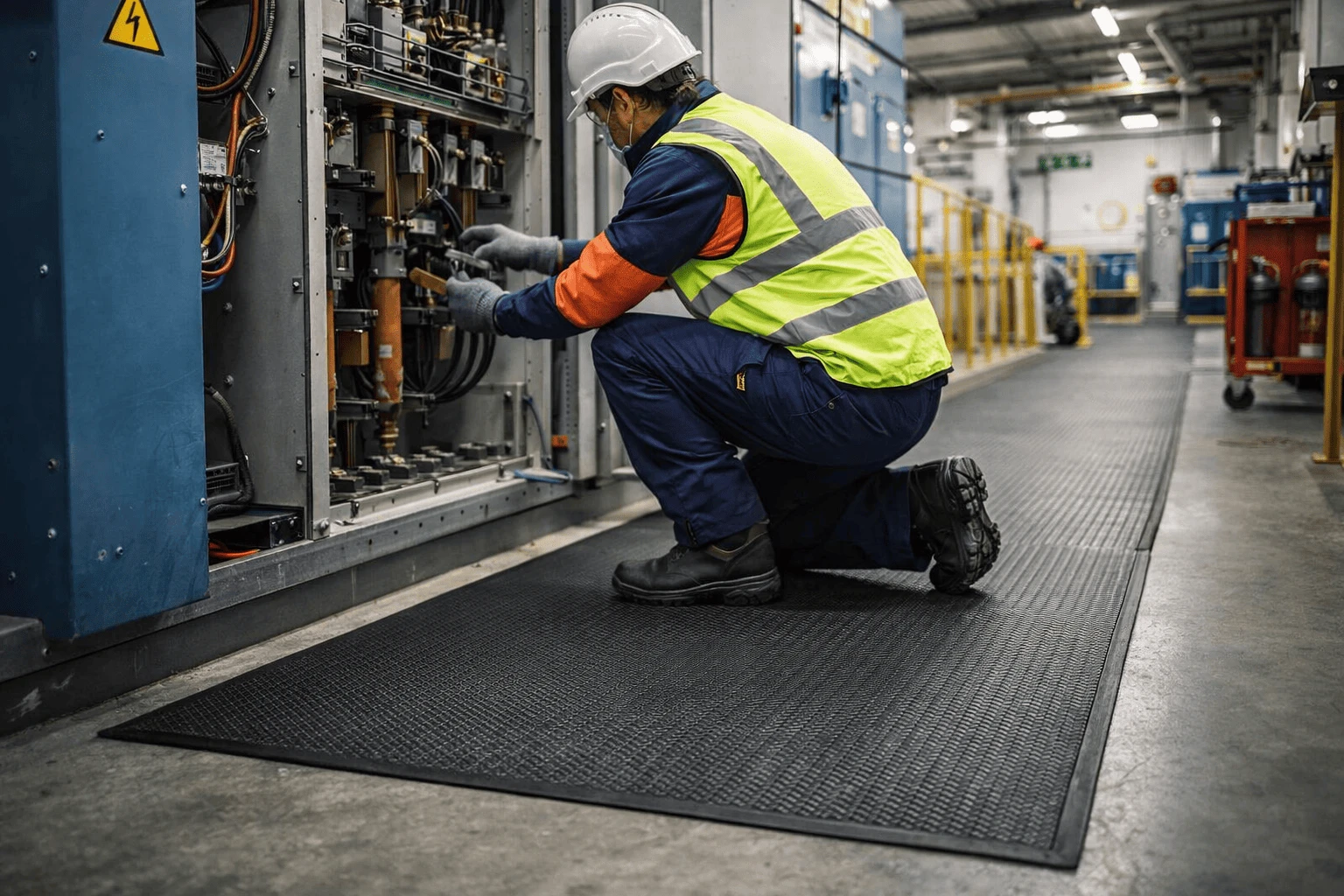
Electrical safety matting is a specialised form of insulating flooring designed to reduce the risk of electric shock in areas where live electrical equipment is present. Unlike standard rubber mats or general-purpose anti-slip flooring, electrical safety matting is manufactured to deliver controlled electrical insulation, helping interrupt the flow of current through the body. It is commonly installed in front of electrical switchboards, control panels, distribution boards, and other areas where workers may be exposed to electrical hazards during operation, testing, or maintenance activities.
Electrical safety matting works by creating a non-conductive barrier between the worker and the ground. If accidental contact with live electrical components occurs, the insulating properties of the mat reduce the likelihood of current passing through the body to earth. Many electrical safety mats also feature textured or ribbed surfaces to improve grip and stability. This is particularly important in environments where workers need a secure footing while concentrating on detailed or safety-critical tasks, reducing the combined risk of slips and electrical exposure.
Electrical safety matting is widely used across UK workplaces where electrical risks cannot be fully eliminated, including:
Electrical switch rooms and substations
Control panels and distribution boards
Workshops and maintenance areas
Manufacturing facilities and plant rooms
In each setting, the objective remains the same: to provide a safer standing surface in areas with electrical exposure and routine access.
Electrical safety matting plays a key role in reducing risk where electrical hazards are part of normal operations. It complements existing safety controls rather than replacing them.
Standing on an insulating surface significantly reduces the risk of electric shock by limiting the path electrical current can take through the body. This is particularly relevant during fault-finding, testing, or maintenance tasks where live components may be exposed. Because electrical safety matting functions passively, it provides continuous protection without relying on user action. This makes it a dependable safeguard in environments where attention may already be focused on complex or hazardous tasks.
Electrical incidents often have consequences beyond immediate injury, including equipment damage, investigations, and unplanned shutdowns. These disruptions can affect productivity, compliance, and business continuity. Addressing electrical risk at the floor level helps reduce the likelihood of incidents that lead to downtime or operational delays. From a risk management perspective, it also demonstrates that reasonable preventative measures are in place as part of a structured safety approach.
UK employers are required to assess workplace risks and implement suitable control measures. Electrical safety matting supports these obligations by helping manage residual risks that cannot be fully controlled through procedures or training alone. When used alongside safe systems of work and appropriate instruction, electrical safety matting contributes to a layered approach to electrical safety that aligns with best practice.
Not all electrical safety matting offers the same level of protection. Understanding classification and material characteristics is essential when selecting matting for specific environments.
Electrical safety matting is classified according to the level of electrical protection it provides.
Class 0 matting is typically used in lower-voltage environments, such as standard switchboards and control panels.
Class 2 matting is designed for higher-voltage applications and is more suitable for industrial installations and plant environments.
Selecting the correct class ensures that the level of insulation matches the electrical risk present.
Thickness affects both insulation performance and durability. Thicker mats are generally more suitable for heavy-duty or high-traffic environments, where long-term wear resistance is important.
Surface finish also plays a role in safety. Fine-ribbed or textured designs improve traction, helping reduce slip risks in areas where stable footing is required during electrical work.
Different workplace areas present varying levels of electrical exposure and physical demand. Matching matting specifications to real-world conditions helps ensure consistent protection over time.
Lower-voltage environments typically require reliable insulation combined with good slip resistance. In these areas, matting should support routine electrical tasks without compromising stability or comfort underfoot.
Industrial settings and plant rooms often involve higher electrical risk and more demanding conditions. In these environments, matting designed for higher voltage ratings and wider coverage helps provide appropriate protection where exposure levels are greater.
Where electrical risk coincides with constant foot traffic or equipment movement, durability becomes a priority. Thicker, heavy-duty matting is better suited to these areas, offering resilience alongside electrical insulation. Electrical safety matting used in demanding environments should meet appropriate insulation ratings and durability requirements to remain effective under regular use.
Correct installation and ongoing maintenance are essential for electrical safety matting to perform as intended.
Matting should be positioned where workers naturally stand while operating or maintaining electrical equipment. Coverage should allow tasks to be completed without stepping off the insulated surface. Mats should lie flat and remain securely in place to avoid creating trip hazards or reducing effective insulation.
Regular inspections help identify wear, damage, or contamination that could affect insulating or anti-slip performance. Dirt, oil, and debris should be removed using appropriate cleaning methods to maintain surface effectiveness. Including electrical safety matting in routine safety checks helps ensure protection remains reliable over time.
Electrical safety matting is a practical and often underappreciated element of workplace protection. Insulating workers from the ground, it helps reduce the risk of electric shock in environments where electrical hazards cannot be fully eliminated.
Understanding matting classes, thickness, and surface design enables organisations to select solutions that align with actual working conditions rather than relying on generic approaches. When correctly installed and properly maintained, electrical safety matting supports safer working practices, operational continuity, and responsible risk management For organisations reviewing electrical safety measures or seeking broader information on workplace flooring solutions, additional guidance can be explored at therubbermats.uk, where safety-focused flooring is presented within a wider industrial context.

UK writer Evan covers home improvement, construction, and lifestyle trends, sharing practical insights for readers.
Oil spills in outdoor and marine environments can cause environmental damage, safety risks, and cost
30 May 2026
In today’s digital-first world, mobile applications are no longer a luxury. They are a necessi
13 May 2026
Industrial accessories rarely fail because of one dramatic mistake. More often, performance declines
18 February 2026
Be the first to share your thoughts
No comments yet. Be the first to comment!
Share your thoughts and join the discussion below.


.webp&w=3840&q=75)