Saturday, October 10, 2026

* All product/brand names, logos, and trademarks are property of their respective owners.
An advanced cancer treatment that costs hundreds of thousands of dollars in the United States can, at some medical institutions in China, run as little as $60,000–$80,000. That is not a rounding difference — it is a gap that, for many international patients, determines whether treatment is accessible at all.
CAR-T cell therapy has advanced rapidly in China over the past several years, with multiple domestically developed products now approved for market. As a result, China is emerging as a serious player in the global cell therapy landscape, and pharmaceutical supply-chain businesses are increasingly involved in connecting Chinese hospitals with patients from abroad.
Unlike conventional chemotherapy, targeted therapy, or antibody-based drugs, CAR-T uses the patient's own immune cells as the active treatment.
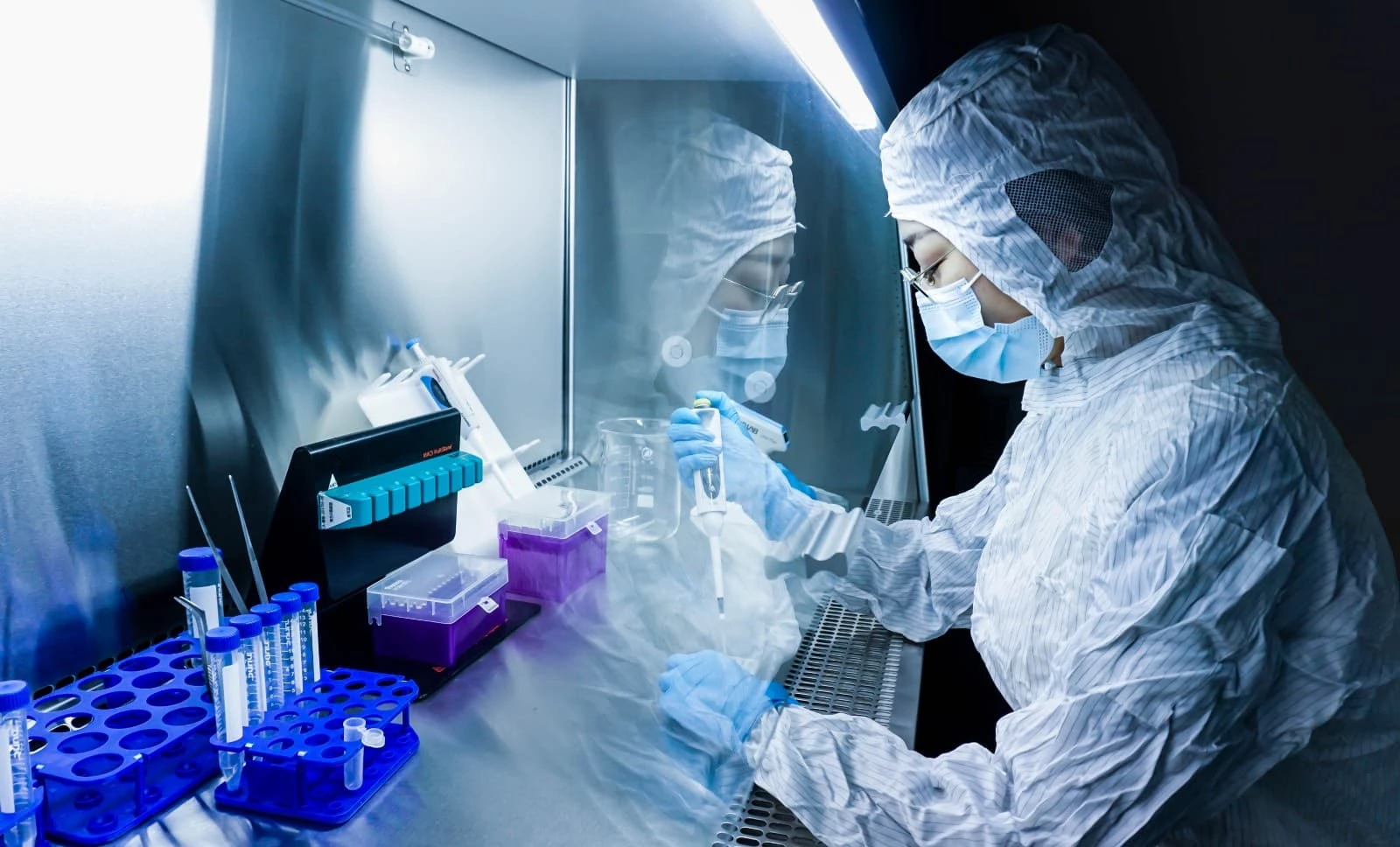
The process works like this: doctors collect T cells — a core part of the immune system's natural defenses — from the patient's blood. Cancer cells are often able to evade these defenses, so scientists use genetic engineering to equip the T cells with chimeric antigen receptors (CARs), effectively installing a new recognition system on the cell surface. Once modified and expanded in the lab, the CAR-T cells are infused back into the patient, where they can identify and attack cells carrying the matching tumor antigen.
The full pathway looks like this:
Cell collection → genetic modification → laboratory expansion → patient conditioning → cell infusion → continued activity in the body
It's this combination of precision medicine and cellular engineering that makes CAR-T fundamentally different from a standard drug injection.
In the U.S., CAR-T therapy is among the most expensive cancer treatments available, with costs ranging from roughly $370,000 to $475,000 or more depending on the product and treatment setting — before accounting for hospitalization and complication management, which can push the total higher still.
In China, some CAR-T treatments are priced around $60,000–$80,000 — in certain cases, only 15–20% of the equivalent U.S. cost.
To put that in perspective: a patient facing a $400,000 treatment cost in the U.S. might, in some circumstances, find a comparable CAR-T treatment in China for around $70,000. For an average family, that's not a marginal saving — it can be a difference of more than $300,000.
It's worth noting that actual costs vary significantly by product, hospital, disease type, treatment plan, and individual patient factors. Not every CAR-T treatment in China falls neatly into the $60,000–$80,000 range. Still, the pricing advantage is a major part of the country's growing international appeal.
China's CAR-T cost advantage isn't simply a matter of cheaper healthcare overall — it reflects the scale and maturity of the country's biopharmaceutical industry:
In short, China isn't just approving more CAR-T products — it's building a full ecosystem spanning R&D, manufacturing, and clinical application, which is the real foundation of its cost competitiveness.
It's tempting to assume a lower price tag means a compromise on quality. That assumption doesn't hold up here.
China has become one of the most active CAR-T research markets in the world. Multiple products are already approved for certain relapsed or refractory blood cancers, and Chinese research institutions are actively developing next-generation approaches, including:
A notable milestone: in June 2026, China's NMPA approved CARsgen's Satricabtagene Autoleucel (satri-cel) for certain advanced gastric and gastroesophageal junction cancers — making it the world's first CAR-T therapy approved for a solid tumor indication. That approval marks a clear shift in China's CAR-T sector, from adapting existing approaches toward independent, proprietary innovation.
Price is only part of the story — clinical outcomes are what ultimately matter. CAR-T is currently most established in blood cancers, including certain B-cell lymphomas, acute lymphoblastic leukemia, and multiple myeloma.
In some clinical studies of relapsed or refractory acute lymphoblastic leukemia, complete response rates have reached 80% or higher; certain lymphoma studies have also reported high objective response rates. These figures come from specific products and studies, though — they shouldn't be read as a blanket claim that 80–90% of all CAR-T patients achieve remission. Outcomes depend heavily on disease type, prior treatment history, overall patient condition, and the specific product used.
CAR-T also carries real risks, most notably cytokine release syndrome (CRS) and neurotoxicity. That makes hospital experience — in patient selection, cell preparation, infusion, and complication management — a critical factor in outcomes.
A growing number of major hospitals and specialized hematology institutions across China now offer CAR-T treatment and research capabilities, with active cell therapy hubs in Guangzhou, Shanghai, Beijing, Chengdu, and Suzhou.
For international patients, the right hospital isn't necessarily the most famous one. The more useful questions are:
These factors typically matter more than price alone when choosing where to be treated.
As advanced treatment and lower cost intersect, medical tourism is shifting. Where patients once looked primarily to the U.S. or Europe for CAR-T therapy, China is increasingly part of that conversation.
Many major Chinese hospitals now run international medical departments offering translation, appointment coordination, medical record handling, and clinical visit support. Coordinating care across borders — from reviewing medical history and identifying the right hospital, to language support, accommodation, and follow-up after returning home — is a multi-stage process, which is where international medical services and pharmaceutical supply chains increasingly intersect.
It's worth emphasizing: CAR-T is not suitable for every patient. Eligibility and treatment approach should always be determined by qualified medical professionals based on an individual's specific condition.
CAR-T has long been one of the most expensive and cutting-edge categories of cancer treatment. China's growing role in that space — combining scientific progress, industrial scale, and a substantial price differential — adds a new dimension to how cancer treatment access is distributed globally, and how many patients can realistically benefit from these therapies.
Tens of thousands of dollars in China versus hundreds of thousands in the U.S. isn't just a pricing story. It's a signal of where global cell therapy access may be headed next — and CAR-T may only be the beginning.
This article is for informational purposes only and does not constitute medical advice. Treatment eligibility, hospital selection, and clinical decisions should always be made in consultation with qualified medical professionals.

No bio available yet.
Coffee lovers are changing the way they start their mornings. Instead of relying only on traditional
26 September 2026
A radiant smile is a powerful asset in your daily life. It significantly boosts your confidence and
11 June 2026
Be the first to share your thoughts
No comments yet. Be the first to comment!
Share your thoughts and join the discussion below.









.webp&w=3840&q=75)